- Feldspathic porcelain veneers are very thin shells of porcelain, usually around 0.3–0.5 mm, bonded to the visible front surface of the teeth.
- They are built up by hand by a dental ceramist, layer by layer, and their translucency is very close to that of natural enamel.
- Most cases need only minimal preparation confined to the enamel, and in carefully selected cases they can be placed with no preparation at all.
- Long-term clinical studies report survival rates above 90% at 10 years when veneers are bonded to enamel and properly maintained.
- They are not right for everyone: I do not recommend them for badly damaged teeth, non-vital teeth, very intense discolouration or bruxism.
What are feldspathic porcelain veneers?
A dental veneer is a thin shell of aesthetic material bonded to the front surface of a tooth to change its colour, shape or proportions. Feldspathic porcelain is the classic dental porcelain: a feldspar-based material with a largely glassy structure that lets light pass through it much as natural enamel does.
Unlike veneers pressed or milled from a ceramic block, feldspathic veneers are built up by hand by the ceramist. Successive layers of porcelain in different shades and translucencies recreate the structure of a natural tooth: a more opaque body, more translucent edges and subtle colour characterisations. The result depends heavily on the ceramist's skill and on close collaboration with the dentist.
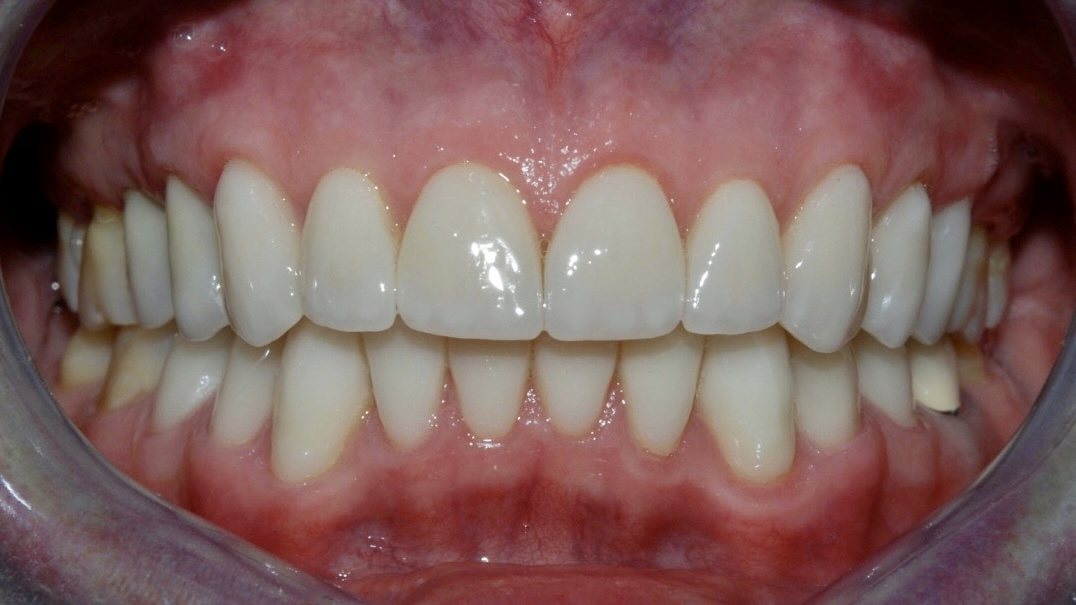
Why do feldspathic veneers look so natural?
A natural tooth is never a single colour. Light passes through the enamel, is reflected by the dentine and returns in different shades near the gum, in the middle of the tooth and at its edge. Through its translucency and the layering technique, feldspathic porcelain can reproduce this play of light more faithfully than most other materials.
Because they can be made very thin, feldspathic veneers also allow as much of the natural tooth as possible to be preserved. The colour of the underlying tooth shows partly through the veneer. This helps the natural look, but it also means that very dark teeth may need a different approach.
Who are feldspathic veneers suitable for?
When they are a very good option
- discoloured teeth that do not respond enough to professional whitening
- irregularly shaped, small or disproportionate teeth
- small gaps between teeth (diastemas)
- slightly worn or chipped edges
- structural restoration of the teeth after orthodontic treatment, when still needed
When I do not recommend veneers
- badly damaged teeth, for which a crown is usually more appropriate
- non-vital teeth (after root canal treatment), which are more fragile and may darken over time
- very intense discolouration, which a thin veneer cannot fully mask
- bruxism (grinding or clenching), because of the high forces acting on the veneers
Decay and gum disease are always treated first. If the main goal is to align the front teeth, I recommend orthodontic treatment first, and veneers only if structural restoration is still needed. I describe how I work in detail on the Porcelain veneers in Bucharest page.
How does treatment work, step by step?
- Consultation and assessment. I examine your teeth and gums, take the necessary X-rays and photograph your teeth before any treatment. We then discuss what you would like to change about your smile.
- Aesthetic planning. Based on photographs and impressions or a scan, a model of your future smile is created. A mock-up, a temporary preview applied directly to your teeth, lets you see the proposed shape before any preparation.
- Tooth preparation. If needed, preparation is minimal and ideally stays within the enamel, with local anaesthetic when required. In some cases veneers can be placed with no preparation.
- Digital impression. I take an intraoral scan, with no impression material. Temporary veneers are placed if needed.
- Laboratory work. The ceramist builds the veneers layer by layer, usually over one to two weeks.
- Try-in and bonding. Shape and colour are checked before bonding, and I photograph the try-in. The veneers are then bonded with an adhesive technique under isolation, after which I check the bite and photograph the final result.
- Follow-up. You return for a check a few weeks later, then for regular check-ups, usually every six months.
Treatment is usually completed in two or three visits over two to three weeks. More complex cases may take longer.
Feldspathic, lithium disilicate or composite veneers?
There is no single "best" material for everyone. The choice depends on the colour of your teeth, how much enamel is available, your bite and your expectations.
| Criterion | Feldspathic porcelain | Lithium disilicate | Composite |
|---|---|---|---|
| Natural appearance | Excellent, translucency very close to enamel | Very good | Good initially, may stain over time |
| Thickness | Very thin | Thin | Variable |
| Material strength | Lower, compensated by bonding to enamel | High | Moderate |
| How it is made | By hand in the lab, layer by layer | Pressed or milled in the lab | Directly on the tooth, in the surgery |
| Durability | Very good long-term | Very good long-term | Lower, needs maintenance |
| Repair | Usually replaced | Usually replaced | Can be repaired directly |
As a material on its own, feldspathic porcelain is less strong than lithium disilicate. Once correctly bonded to enamel, however, the veneer and the tooth work as a unit, and long-term clinical performance is very good.
How long do feldspathic veneers last?
Feldspathic porcelain veneers are among the most thoroughly studied aesthetic restorations. Long-term clinical studies report survival rates of over 90% at 10 years and around 80% at 20 years.
How long they last depends largely on a few factors:
- how much of the bonding surface is enamel, which provides the strongest bond
- avoiding habits that overload the teeth, such as biting hard objects or clenching
- oral hygiene and gum health
- attending regular check-ups
The most common problems over time are a chipped edge, a veneer coming loose, decay at its margin or gum recession that makes the margin visible. Most can be managed if they are caught early.
How to care for your veneers
- brush twice a day and clean between your teeth daily with floss or interdental brushes
- avoid biting hard objects: pens, nails, ice, fruit stones, bottle caps
- attend check-ups and professional cleaning, usually every six months
Porcelain does not stain like composite, but it also does not change colour with whitening. That is why, if you would like whiter teeth overall, whitening is done before the veneers are made, so that we can match their shade to your other teeth.
You can read more about aesthetic dentistry at ARTeeth Dental Clinic on the clinic's website (in Romanian).
Frequently asked questions
Is getting feldspathic veneers painful?
Usually not. When preparation is needed it is minimal and done under local anaesthetic. After bonding, some patients have mild sensitivity, which normally settles within a few days.
Can porcelain veneers be whitened?
No. Porcelain does not change colour with whitening. If you would also like your other teeth whitened, this is done before the veneers are made so that their shade matches.
Do veneers damage your teeth?
Feldspathic veneers usually need only minimal preparation confined to the enamel, and sometimes none. When a tooth is prepared, however, the procedure is irreversible, which is why the decision is made only after a careful assessment.
Will people notice I have veneers?
Well-made feldspathic veneers are very hard to tell apart from natural teeth, thanks to the translucency and layering of the porcelain.
Can I eat normally with veneers?
Yes. You can eat normally, but it is best to avoid biting directly into very hard things such as ice, fruit stones or pens.
What happens if a veneer chips?
A small chip can sometimes be polished. If the damage is larger, that individual veneer is replaced, without having to redo the whole treatment.
This article provides general information and does not replace a consultation and clinical examination. Treatment is recommended only after an individual assessment.

Dentist with over 20 years of practice dedicated to prosthodontics and dental aesthetics. Founder of ARTeeth Dental Clinic, Bucharest.
At your first consultation we assess your teeth and gums, talk about what you would like to change, and I explain the options that suit your case, with no obligation.