- Zirconia (zirconium dioxide) is a ceramic material and one of the strongest used in dentistry.
- Crowns can be monolithic, made from a single, very strong piece, or layered, covered with porcelain for a more natural look.
- They are recommended for badly damaged teeth, teeth with large fillings, root-canal-treated teeth, or to replace old metal-ceramic crowns.
- Because they have no metal framework, there is no grey line at the gum, and the material is very well tolerated by the tissues.
- Clinical studies show results comparable to metal-ceramic crowns, with survival rates above 90% at five years.
What is zirconia and why is it used for crowns?
A dental crown is a cap that covers the whole tooth, restoring its shape, function and appearance when the tooth is too damaged for a filling or a veneer. Zirconia, or stabilised zirconium dioxide, is a white ceramic material that is very hard and highly resistant to fracture.
Zirconia crowns are made digitally. The prepared tooth is scanned or an impression is taken, the crown is designed on a computer, then milled from a zirconia block and sintered, that is, fired at very high temperatures, which gives it its final strength. This precise process allows the crown to fit the tooth very accurately.
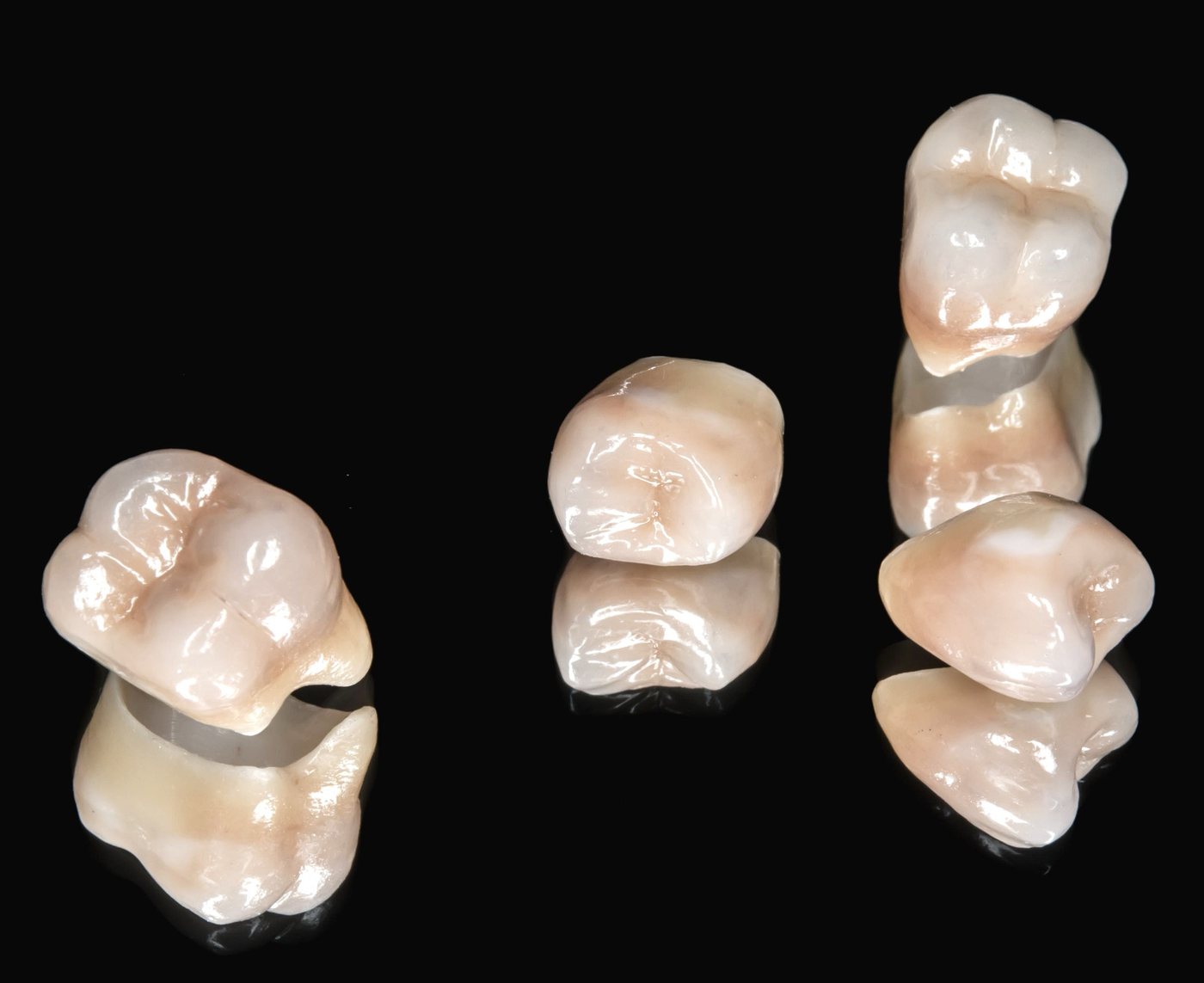
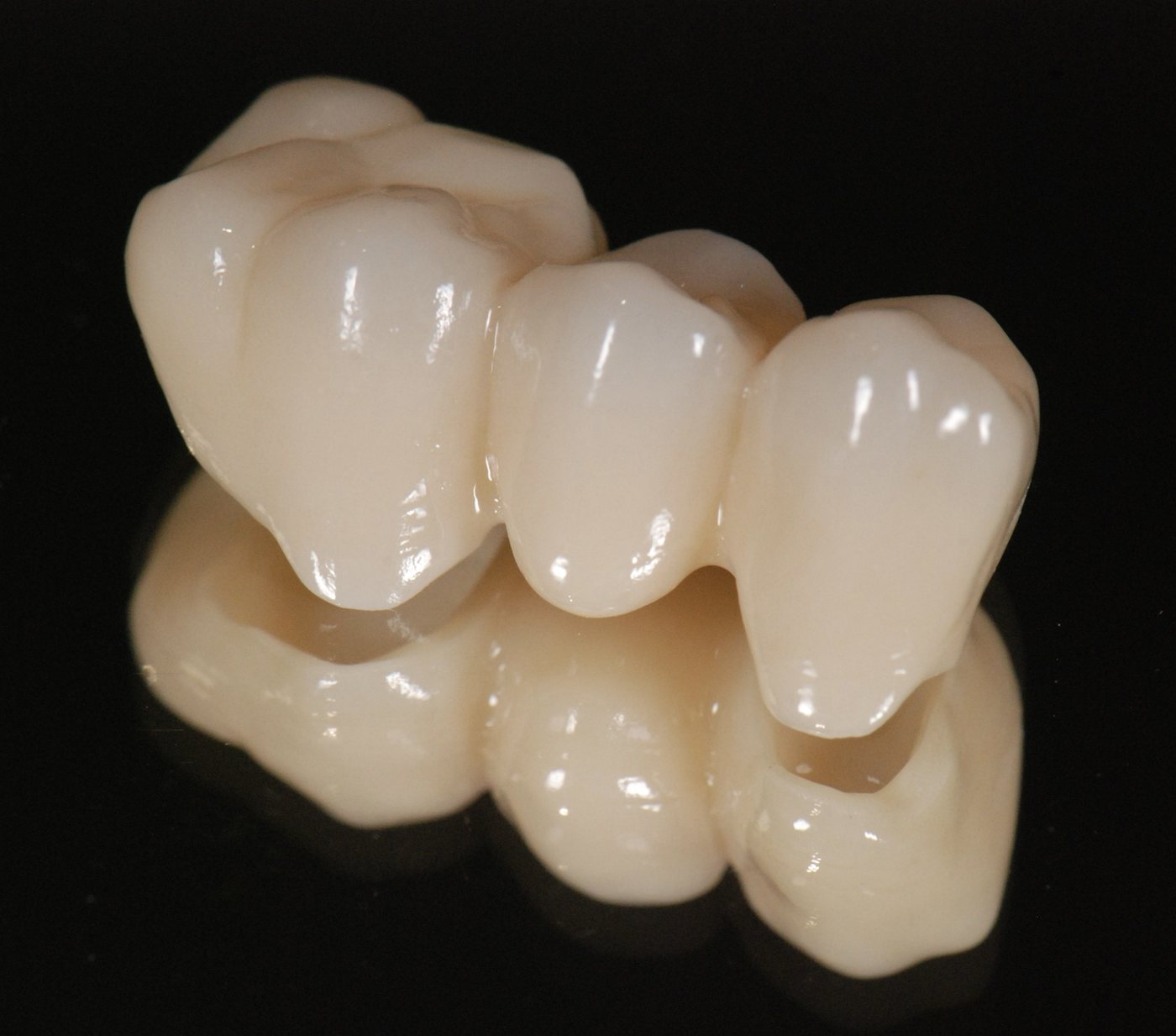
Monolithic or layered zirconia?
Monolithic zirconia
The crown is made from a single piece of zirconia, with no additional porcelain layer. It is the strongest option and usually requires less reduction of the tooth. Modern multi-layered materials with shade gradients have become increasingly aesthetic, but zirconia remains more opaque than natural enamel. It is an excellent choice for back teeth, for patients who grind their teeth or where space is limited.
Layered zirconia
A zirconia framework provides the strength, and the ceramist covers it with layers of porcelain that bring the translucency and colour play of a natural tooth. This is the preferred option for front teeth, where aesthetics come first. Over time, the porcelain layer can chip more easily than monolithic zirconia, which is why the bite is taken into account when choosing.
There are also intermediate solutions, for example monolithic zirconia on the biting surface with porcelain only on the visible face. The choice is made tooth by tooth.
When is a zirconia crown recommended?
- teeth largely destroyed by decay or fracture
- teeth with very large fillings at risk of fracturing
- back teeth after root canal treatment, which become more fragile
- replacing old metal-ceramic crowns, for example when a grey line appears at the gum
- crowns on dental implants
- dental bridges, to replace one or more missing teeth
If the tooth still has enough healthy structure, a more conservative option such as an inlay, onlay or veneer may be preferable. A crown requires more extensive preparation of the tooth, so it is recommended only when it is truly needed.
What are the benefits of zirconia crowns?
- Very high strength, especially the monolithic version
- No metal framework: no grey line at the gum, and allergies to dental alloys are no longer a concern
- Biocompatibility: the gum tolerates zirconia very well
- Precision, thanks to digital design and milling
- Low wear of opposing teeth, when the surface is well polished
How does treatment work, step by step?
- Consultation and assessment. I examine the tooth, take the necessary X-rays and check the health of the root and gum. If needed, the tooth is treated first, for example with root canal treatment or a core build-up.
- Tooth preparation. The tooth is evenly shaped under local anaesthetic to make room for the crown. How much is removed depends on the type of crown chosen.
- Impression. A precise digital or conventional impression is taken and the shade is selected.
- Temporary crown. Until the final crown is ready, the tooth is protected by a temporary crown.
- Laboratory work. The crown is designed, milled and sintered. For layered crowns, the ceramist then adds the porcelain layers.
- Try-in and cementation. We check the fit, bite and shade, then the crown is permanently cemented.
- Follow-up. You return for a check a few weeks later and then regularly.
Two visits one to two weeks apart are usually needed. Cases involving several teeth or preparatory treatment may take longer.
Zirconia, metal-ceramic or lithium disilicate?
| Criterion | Monolithic zirconia | Layered zirconia | Metal-ceramic | Lithium disilicate |
|---|---|---|---|---|
| Aesthetics | Good, more opaque | Very good | Good, a grey line may appear | Very good |
| Strength | Very high | High (framework), porcelain layer may chip | High | High |
| Metal framework | No | No | Yes | No |
| Best suited for | Back teeth, bruxism, implants | Front teeth, aesthetics | Long bridges, special cases | Front teeth and premolars |
No single material suits every tooth. Different materials may be used in the same mouth, depending on the position of the tooth, biting forces and aesthetic needs.
How long does a zirconia crown last?
Analyses pooling clinical studies report survival rates above 90% at five years for single zirconia crowns, comparable to metal-ceramic crowns. Monolithic zirconia carries the lowest risk of chipping, because it has no separate porcelain layer.
How long it lasts depends on:
- the health of the tooth under the crown and of the gum
- oral hygiene, especially at the crown margin
- tooth grinding, and wearing a night guard if one was recommended
- regular check-ups
The most common problems over time are decay at the crown margin, the crown coming loose or, for layered crowns, chipping of the porcelain layer. The crown itself cannot decay, but the tooth beneath it can, which is why good hygiene remains essential.
How to care for a zirconia crown
- brush twice a day and clean between your teeth daily with floss or interdental brushes
- avoid biting hard objects: ice, fruit stones, pens, bottle caps
- wear a night guard if you grind your teeth and one was recommended
- attend check-ups and professional cleaning, usually every six months
You can read more about prosthodontic treatments at ARTeeth Dental Clinic on the clinic's website (in Romanian).
Frequently asked questions
Is getting a zirconia crown painful?
No. The tooth is prepared under local anaesthetic. After cementation there may be mild sensitivity, which usually settles within a few days.
Will people notice I have a crown?
A well-made zirconia crown blends in naturally with the other teeth. For front teeth, the layered version is usually preferred, as it reproduces a natural appearance most faithfully.
Can I be allergic to zirconia?
Zirconia is a ceramic material that the body tolerates very well. Allergic reactions to zirconia are considered extremely rare.
Will a zirconia crown hold up if I grind my teeth?
Monolithic zirconia is one of the strongest options for patients with bruxism. Even so, a night guard is usually recommended to protect both the crowns and the natural teeth.
Can a zirconia crown be whitened?
No. Zirconia does not change colour with whitening. If you would also like your other teeth whitened, this is done before the crown shade is chosen.
How long does treatment take?
Usually two visits one to two weeks apart. In between, the tooth is protected by a temporary crown.
Which is better, a crown or a veneer?
It depends on how damaged the tooth is. A veneer covers only the visible front and preserves more of the tooth, suitable for healthy teeth with aesthetic concerns. A crown covers the whole tooth and is recommended when it is largely destroyed.
This article provides general information and does not replace a consultation and clinical examination. Treatment is recommended only after an individual assessment.

Dentist with over 20 years of practice dedicated to prosthodontics and dental aesthetics. Founder of ARTeeth Dental Clinic, Bucharest.
At your consultation we examine the tooth, take the necessary X-rays and discuss the treatment options, with the advantages and limits of each, with no obligation.