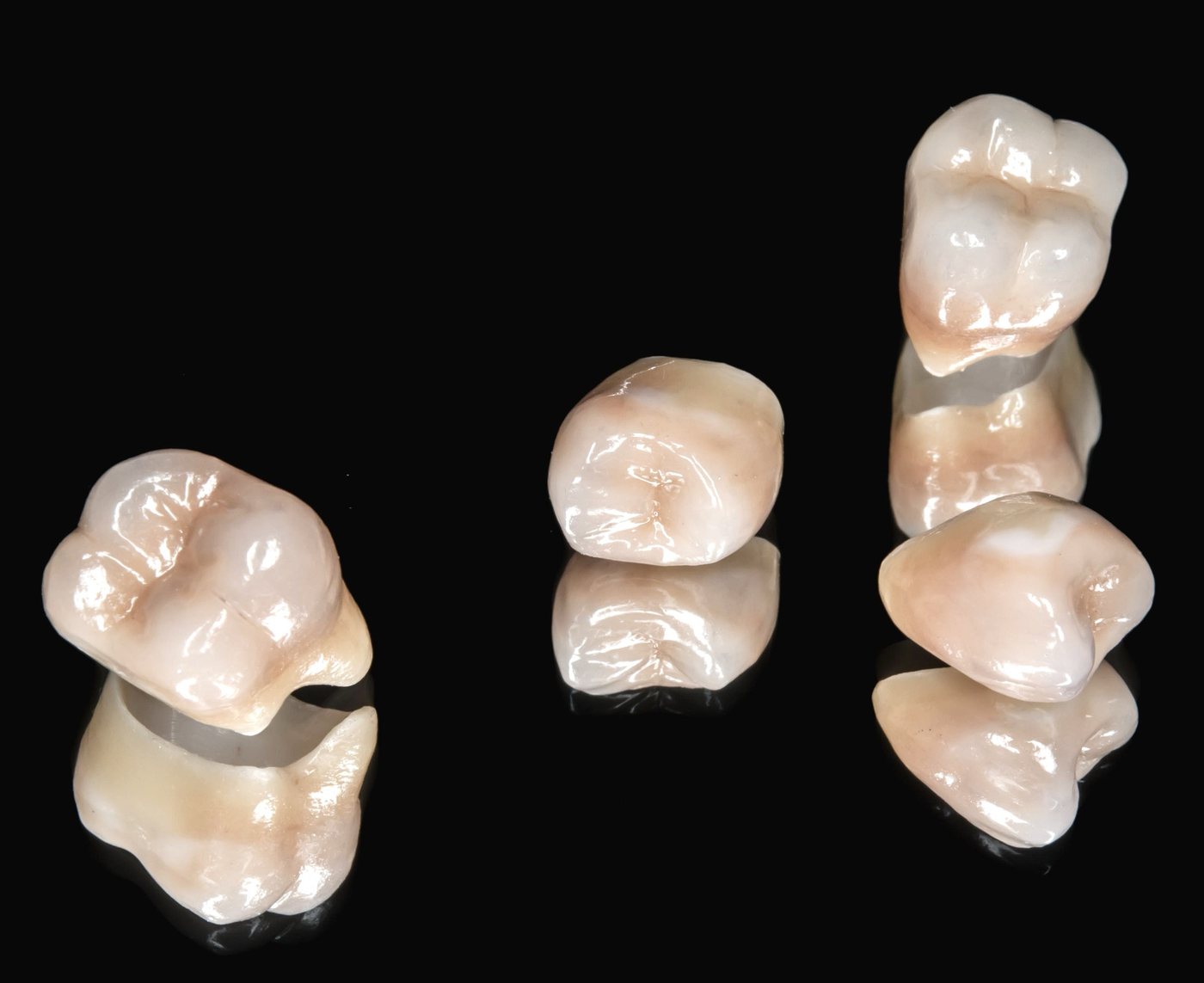
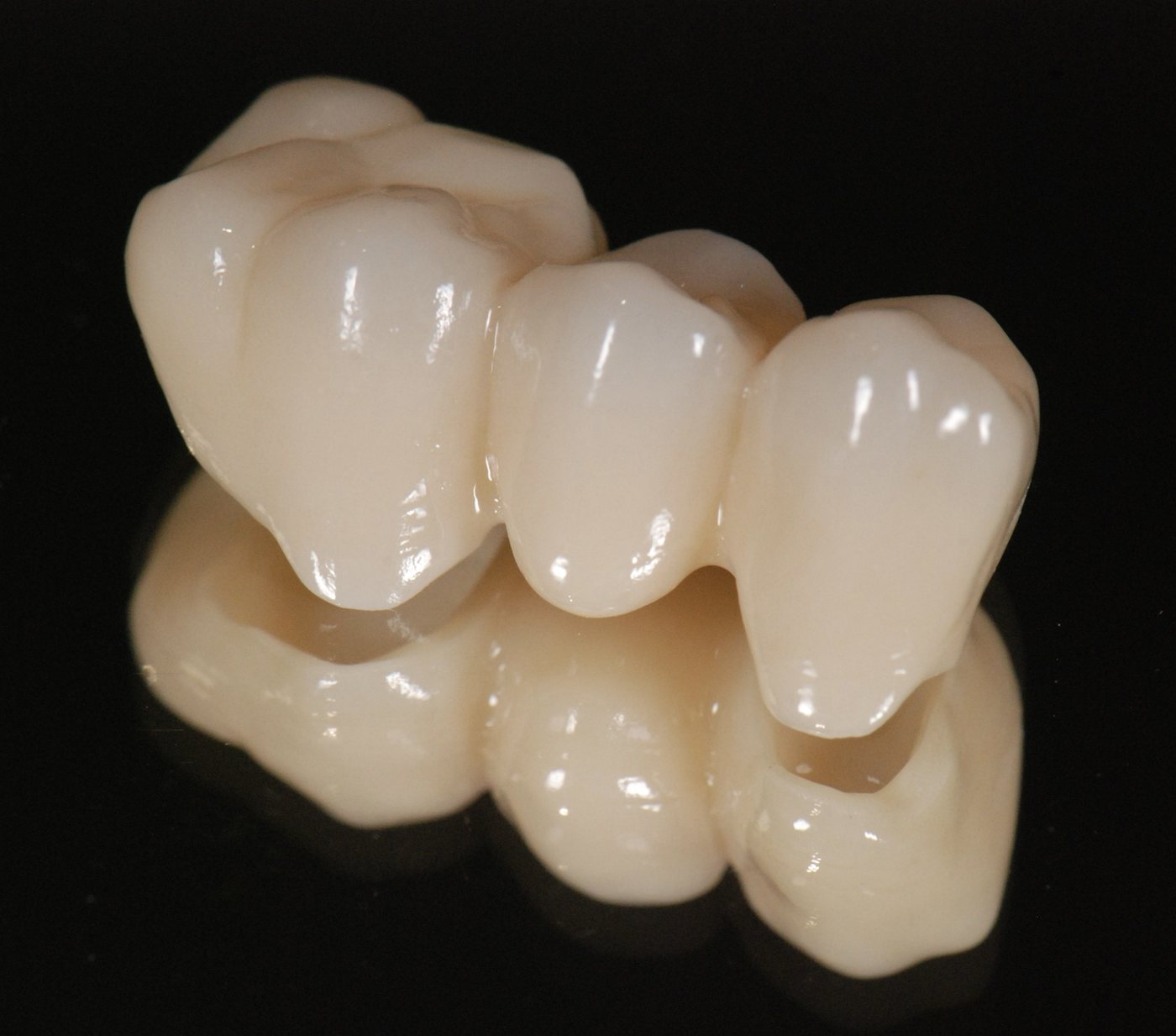
Dental crowns are part of my work in prosthodontics and dental aesthetics at ARTeeth Dental Clinic in Bucharest. All the crowns I make are metal-free, and I choose the material for each tooth individually. On this page I explain the criteria behind that choice.
- A crown covers the whole tooth and restores its shape, function and appearance when the tooth is too damaged for a filling or a veneer.
- For aesthetic restorations in the front of the mouth I choose all-ceramic crowns.
- For extra aesthetics I make zirconia crowns to which the technician adds porcelain.
- When the crown thickness does not allow a porcelain layer, when the risk of fracture is high or when the tooth is strongly discoloured, I choose multilayer or monolithic zirconia.
- Different materials can be used in the same arch, depending on the position and condition of each tooth.
When is a crown needed?
- teeth badly damaged by decay or fractures
- teeth with very large fillings that are at risk of fracturing
- teeth with root canal treatment, which become more fragile
- teeth with intense discolouration that a veneer cannot mask
- replacing old crowns, for example metal-ceramic crowns showing a grey line at the gum
- crowns on implants and dental bridges
A crown requires more tooth preparation than a veneer. If the tooth still has enough healthy structure, I prefer a more conservative option, such as a composite restoration or a porcelain veneer.
How I choose the material
No single material suits every tooth. The choice takes into account the position of the tooth, how visible it is when you smile, the space available for the crown, the biting forces and the colour of the tooth the crown will be cemented on. In short, this is how I choose in my practice:
All-ceramic crowns, for the front teeth
For aesthetic restorations in the front of the mouth I choose all-ceramic crowns. Ceramic lets light pass through it much as natural enamel does, so the restored tooth blends more easily with its neighbours. This is also the area where differences in colour and translucency are most noticeable.
Zirconia with added porcelain, for extra aesthetics
When a tooth needs the strength of zirconia but also as natural a look as possible, I make zirconia crowns to which the ceramist adds porcelain. The zirconia forms the strong core of the crown, and the added porcelain gives it the translucency and shades of a natural tooth. The porcelain layer, however, needs enough space.
Multilayer or monolithic zirconia
I choose multilayer or monolithic zirconia, meaning zirconia without added porcelain, in three situations:
- when the crown thickness does not allow a porcelain layer. A zirconia crown without added porcelain can be thinner and still remain strong.
- when the risk of fracture is high, for example on back teeth, which take the heavy chewing forces, or in patients who grind their teeth. Without a separate porcelain layer, there is nothing to chip.
- when the tooth is strongly discoloured. Zirconia is more opaque than porcelain and masks the dark colour of the tooth underneath better.
Multilayer zirconia has shade gradients built into the material itself, lighter and more translucent towards the biting edge and more saturated towards the gum. This allows a single-piece crown to look natural without added porcelain.
The differences between these options, including a comparison with metal-ceramic crowns, are explained in detail in the article on zirconia crowns.
Zirconia or zirconium?
The correct term for the material is zirconia, that is, zirconium dioxide. Zirconium is the name of the chemical element, and in Romanian the material is often called "zirconiu". Crowns described as zirconium crowns are made of the same material as zirconia crowns.
How I work, step by step
- Consultation and assessment. I examine the tooth and gum and take the necessary X-rays. If needed, the tooth is treated first, for example with root canal treatment or a core build-up.
- Initial photographs. I photograph the teeth before treatment. The photographs help me choose shape and colour and remain a reference point for the final result.
- Tooth preparation. The tooth is prepared under local anaesthetic. How much is removed depends on the material chosen, and zirconia crowns without added porcelain need less space.
- Digital scan. I take an intraoral scan, with no impression material. I explain the procedure in the article on intraoral scanning.
- Temporary crown. Until the final crown is ready, the tooth is protected by a temporary crown.
- Making the crown. The crown is made in the laboratory, together with the dental technician, based on the scan and the photographs.
- Try-in and cementation. I check the fit, the bite and the colour, then the crown is cemented permanently.
- Regular check-ups. You return for a check a few weeks later, then for regular check-ups, usually every six months.
How long a crown lasts and how to care for it
Clinical studies report survival rates above 90% at five years for single zirconia crowns, comparable to those of metal-ceramic crowns. How long a crown lasts, however, depends mainly on the tooth underneath and on how it is looked after.
The crown itself cannot decay, but the tooth underneath can, especially at the edge near the gum. That is why careful brushing, cleaning between the teeth with floss or interdental brushes and regular check-ups matter. If you grind your teeth, I may recommend a night guard, which protects both the crowns and your natural teeth.
What affects the cost of treatment?
The cost is set after the consultation. It depends on the number of teeth treated, on the material chosen for each crown and on any treatment needed beforehand, such as root canal treatment or core build-ups. I present the treatment plan and the cost before we begin.
Frequently asked questions
What is the difference between an all-ceramic crown and a zirconia crown?
Both are metal-free. All-ceramic crowns have a translucency close to that of enamel, and I choose them for aesthetic restorations in the front of the mouth. Zirconia is stronger and more opaque, so I choose it when the risk of fracture is high or when the tooth is strongly discoloured.
What does monolithic zirconia mean?
The crown is made from a single piece of zirconia, with no porcelain added on top. It is the strongest option and has no porcelain layer that could chip.
Do zirconia crowns look natural?
Yes, especially when the technician adds porcelain over the zirconia or when multilayer zirconia, with its shade gradients, is used. Zirconia is still more opaque than enamel, which is why for the front teeth I often prefer all-ceramic crowns.
I have a very dark tooth. Which type of crown suits it?
When a tooth is strongly discoloured, I usually choose multilayer or monolithic zirconia, because it masks the colour of the tooth underneath better.
Is impression material used?
As a rule, no. I work with intraoral scanning, so the impression is digital.
How many visits are needed?
Usually at least two visits, one to two weeks apart. Cases involving several teeth or preparatory treatment can take longer.
This page provides general information and does not replace a consultation and clinical examination. Treatment is recommended only after an individual assessment.

Dentist with over 20 years of practice dedicated to prosthodontics and dental aesthetics. Founder of ARTeeth Dental Clinic, Bucharest.
At your first consultation I examine the tooth, take the necessary X-rays and a digital scan. Based on them, I explain which type of crown I recommend and why, before any treatment begins.