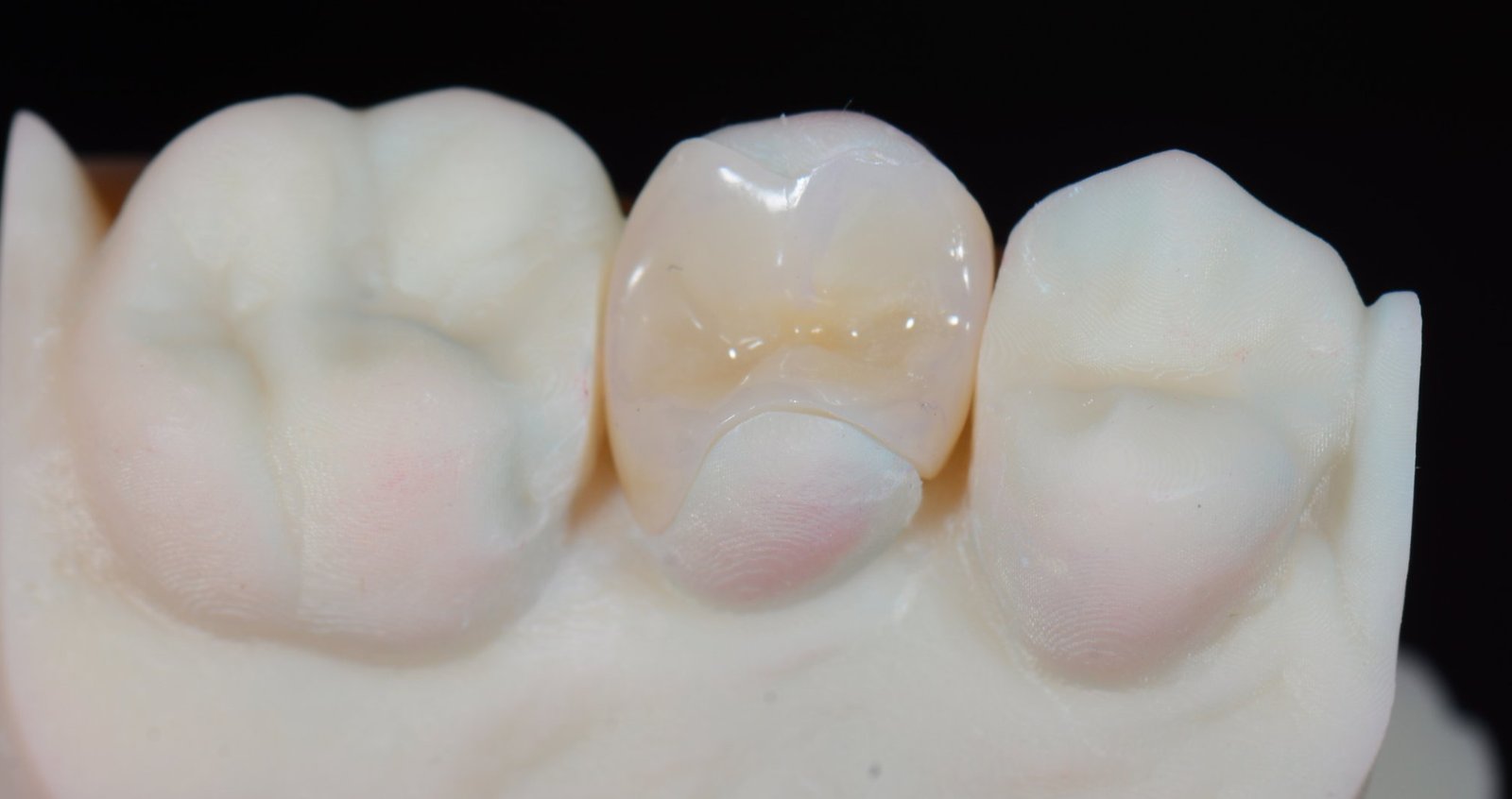
When a back tooth has lost a significant part of its structure but still has enough healthy tissue, a crown is not always necessary. An inlay or onlay restores only the lost part of the tooth and preserves the rest.
- Inlays and onlays are restorations made in the laboratory from an impression of the tooth and then bonded to it.
- An inlay restores a cavity inside the tooth. An onlay also covers one or more cusps, the points on the chewing surface.
- They are stronger than large fillings and preserve more of the natural tooth than a crown.
- They are made of ceramic or composite.
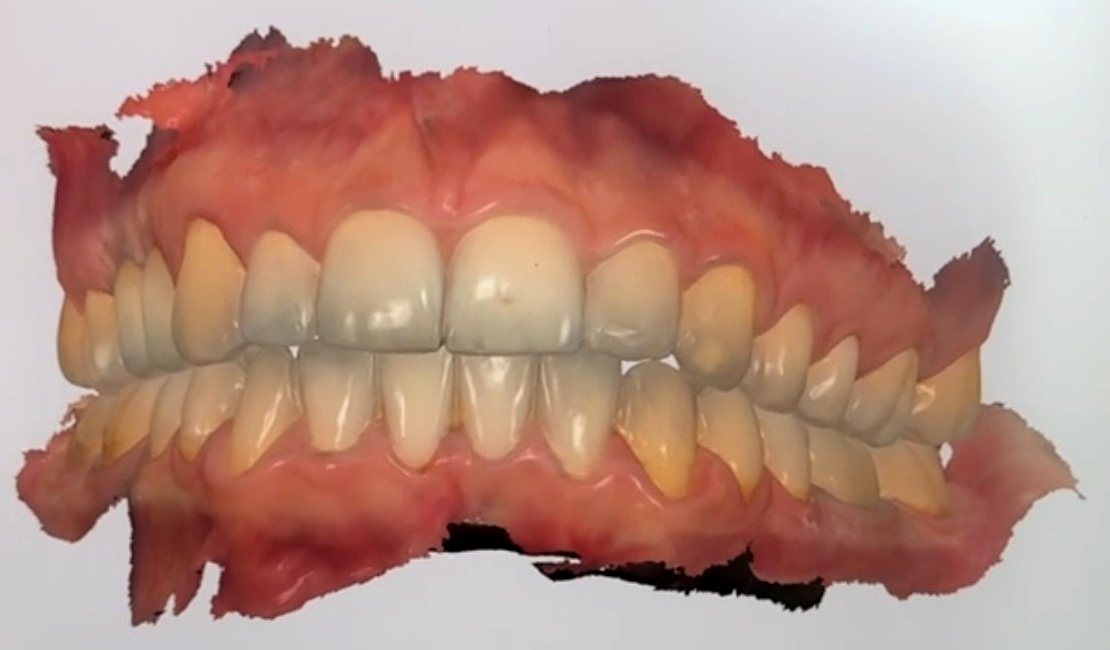
- I usually take the impression by intraoral scanning.
What are inlays and onlays?
They are partial restorations, used mainly on back teeth: premolars and molars. Unlike an ordinary filling, which is shaped directly in the mouth, inlays and onlays are made in the laboratory from an impression of the prepared tooth. This allows the shape, the contacts with the neighbouring teeth and the chewing surface to be restored more precisely.
Inlay or onlay?
- An inlay fills a cavity between the cusps of the tooth without covering them.
- An onlay also restores one or more cusps. It is used when the walls of the tooth are thin or cracked and need protection.
The choice depends on how much of the tooth has been lost and how strong the remaining walls are.
When do I recommend them?
- extensive decay, where a direct filling would be too large
- replacing old, large fillings that are damaged or leaking
- cracked or fractured cusps
- teeth that still have enough healthy tissue to avoid a crown
When a tooth is badly damaged, a crown remains the safer option. I describe crowns on the page about ceramic and zirconia crowns.
Benefits
- More conservative than a crown. Only the damaged tissue is removed, not the whole outline of the tooth.
- Stronger than large fillings. Being made in the laboratory, they generally have better mechanical properties and wear less.
- Precise shape and contacts with the neighbouring teeth, which prevents food from getting stuck between the teeth.
- Natural appearance, especially in ceramic.
What are they made of?
Inlays and onlays are made of ceramic or composite. Ceramic looks very close to the natural tooth, resists wear and keeps its colour much better than composite. Laboratory composite is easier to repair and gentler on the opposing teeth. I choose the material for each tooth individually, according to the size of the restoration and the biting forces. You will find an overview of materials on the page about prosthodontics.
How treatment works
- Consultation and X-rays. I check the tooth, the old fillings and the health of the nerve.
- Tooth preparation. Under local anaesthetic, I remove the decay or the old filling and shape the cavity.
- Impression. Usually by intraoral scanning, with no impression material. I explain the procedure in the article on intraoral scanning.
- Temporary restoration. Until the final restoration is ready, the tooth is protected by a temporary filling.
- Laboratory work. The dental technician makes the inlay or onlay from the digital model.
- Adhesive cementation. I check the fit and the bite, then the restoration is bonded to the tooth.
Usually two visits are needed, a few days to two weeks apart.
How long do they last?
For ceramic inlays and onlays, clinical studies report survival rates above 90% at ten years. Longevity depends on oral hygiene, regular check-ups and protecting the teeth in cases of bruxism.
Source: Morimoto S, Rebello de Sampaio FB, Braga MM, Sesma N, Özcan M. Survival Rate of Resin and Ceramic Inlays, Onlays, and Overlays: A Systematic Review and Meta-analysis. Journal of Dental Research, 2016; 95(9): 985–994.
What affects the cost?
The cost is set after the consultation. It depends on the number of teeth treated, the type of restoration and the material chosen. I present the treatment plan and the cost before we begin.
Frequently asked questions
What is the difference between an inlay and an onlay?
An inlay fills a cavity between the cusps of the tooth. An onlay also restores one or more cusps when they are weakened or cracked.
Is an inlay better than a filling?
For large cavities, yes. Being made in the laboratory, an inlay has a more precise shape and is stronger than a direct filling of the same size.
When is a crown needed instead of an onlay?
When the tooth is badly damaged and no longer has enough healthy tissue for the restoration to be bonded to.
What material are they made of?
Ceramic or laboratory composite. The material is chosen for each tooth individually.
How many visits are needed?
Usually two: one for tooth preparation and the impression, and one for cementation.
Is impression material used?
As a rule, no. I work with intraoral scanning, so the impression is digital.
This page provides general information and does not replace a consultation and clinical examination. Treatment is recommended only after an individual assessment.

Dentist with over 20 years of practice dedicated to prosthodontics and dental aesthetics. Founder of ARTeeth Dental Clinic, Bucharest.
At your consultation I examine the tooth, take the necessary X-rays and explain whether an inlay, an onlay or a crown is the right solution.