Prosthodontics, together with dental aesthetics, is the field to which my work of more than 20 years has been dedicated. At ARTeeth Dental Clinic in Bucharest I work with ceramic restorations and digital impressions taken by intraoral scanning. On this page I explain which restorations are available, how I choose the material and how treatment works.
- Prosthodontics restores damaged teeth or replaces missing ones so that they function and look natural.
- Fixed restorations include veneers, crowns, bridges, inlays, onlays and implant restorations.
- For veneers, crowns and bridges I work with metal-free ceramics: feldspathic porcelain for veneers, all-ceramic crowns for the front teeth and zirconia where strength is needed.
- I take impressions by intraoral scanning with the 3Shape TRIOS 5, without impression material.
- The material is chosen for each tooth individually, according to position, space, bite and the colour of the tooth.
What is prosthodontics?
Prosthodontics is the branch of dentistry that restores damaged teeth and replaces missing ones. The aim is not only aesthetic. A successful restoration must allow proper chewing, keep the bite stable, protect the remaining teeth and gums, and look as close as possible to natural teeth.
A good restoration starts with a correct diagnosis. Before any restoration, the teeth and gums must be healthy. That is why preparatory treatment, such as gum treatment, root canal treatment or core build-ups, comes first. I have written about gum disease and its link with restorations in the article on periodontitis.
Types of prosthetic restorations
- Porcelain veneers are thin shells of ceramic bonded to the visible front of the teeth to change their colour, shape or proportions. Details on the page about porcelain veneers.
- Dental crowns cover the whole tooth when it is too damaged for a filling or a veneer. Details on the page about ceramic and zirconia crowns.
- Dental bridges replace one or more missing teeth, supported by the neighbouring teeth or by implants.
- Inlays and onlays are laboratory-made restorations that rebuild only the lost part of the tooth. They preserve more of the natural tooth than a crown.
- Implant restorations range from a single crown to a full arch. Details on the page about dental implants and in the article on All-on restorations.
When several teeth are affected, the restorations are planned together in a complete treatment plan, as described on the page about full mouth rehabilitation.
Ceramics: the core material of my work
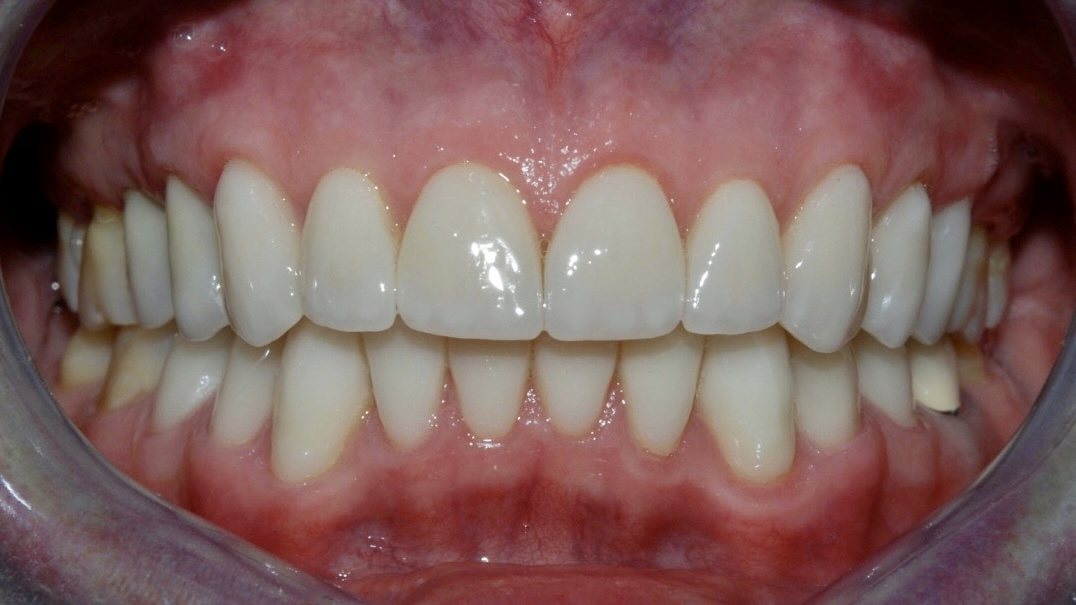
Dental ceramic is the material that comes closest to natural enamel in both appearance and durability. It resists wear and staining, is very well tolerated by the gums and lets light pass through it much as a natural tooth does. The veneers, crowns and bridges I make are metal-free, so there is no grey line at the gum, typical of older metal-ceramic crowns.
I use several types of ceramic, each with its own role:
- Feldspathic porcelain is the most translucent ceramic. The ceramist builds it up by hand, layer by layer, and I use it for veneers. I explain this material in detail in the article on feldspathic porcelain veneers.
- All-ceramic restorations are my choice for crowns in the front of the mouth, where aesthetics come first.
- Zirconia with added porcelain combines the strength of zirconia with the look of porcelain layered by the technician.
- Multilayer or monolithic zirconia is the strongest option. I use it when space is limited, when the risk of fracture is high or when the tooth underneath is strongly discoloured. I have written about zirconia in the article on zirconia crowns.
How I choose the material
No single material suits every tooth, and different materials can be used in the same arch. The choice takes into account:
- the position of the tooth and how visible it is when you smile
- the space available for the restoration, which decides whether a porcelain layer can be added
- biting forces and habits such as bruxism
- the colour of the tooth the restoration will be cemented on
- how much of the natural tooth can be preserved
At your consultation I explain, for each tooth, which material I recommend and why.
Intraoral scanning: the digital impression
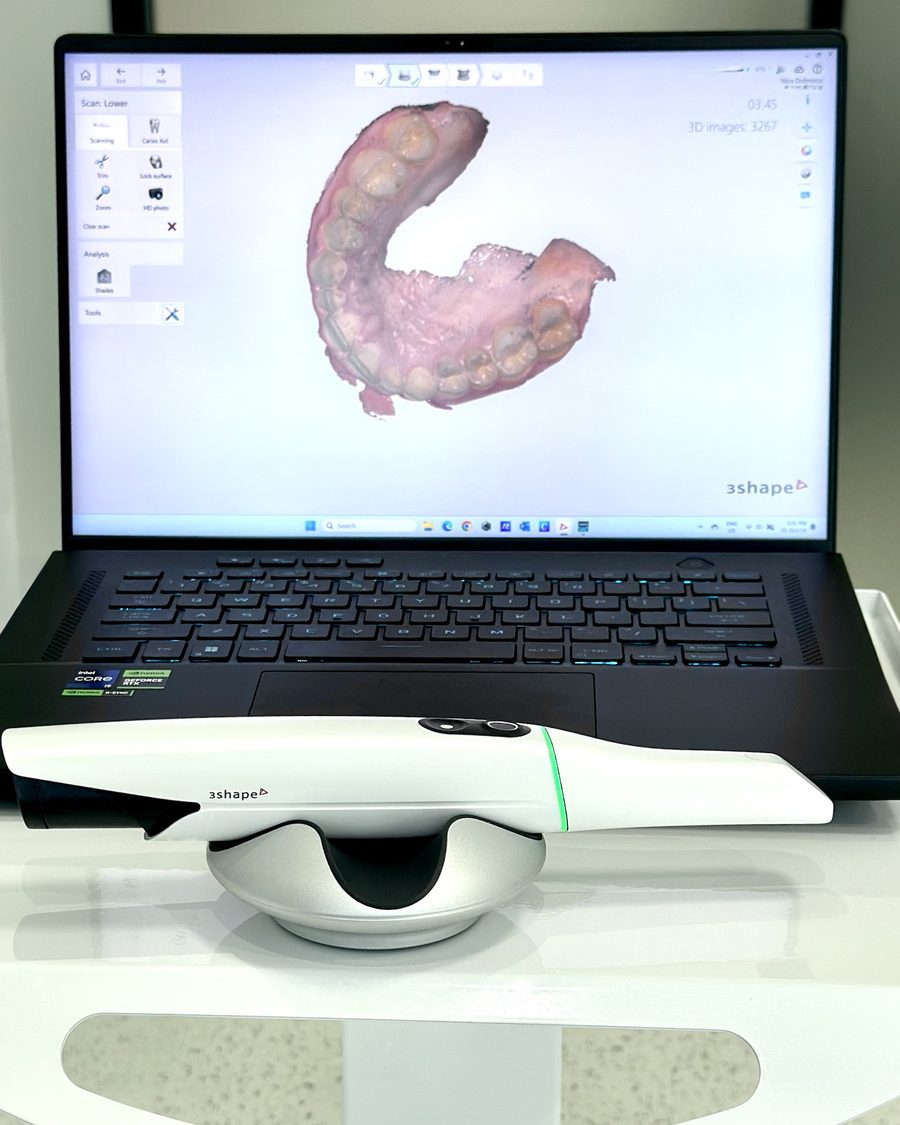
For any prosthetic restoration, the laboratory needs an exact copy of the teeth. I obtain it by intraoral scanning with the 3Shape TRIOS 5, without trays or impression material. The scanner records the teeth and gums, and the 3D model appears directly on screen. I check it magnified on the spot and, if an area is not clear enough, rescan it straight away.
A digital impression is more comfortable for the patient, especially for those with a strong gag reflex, and the data can be sent to the laboratory immediately. I explain the procedure in detail in the article on intraoral scanning.
From scan to final restoration
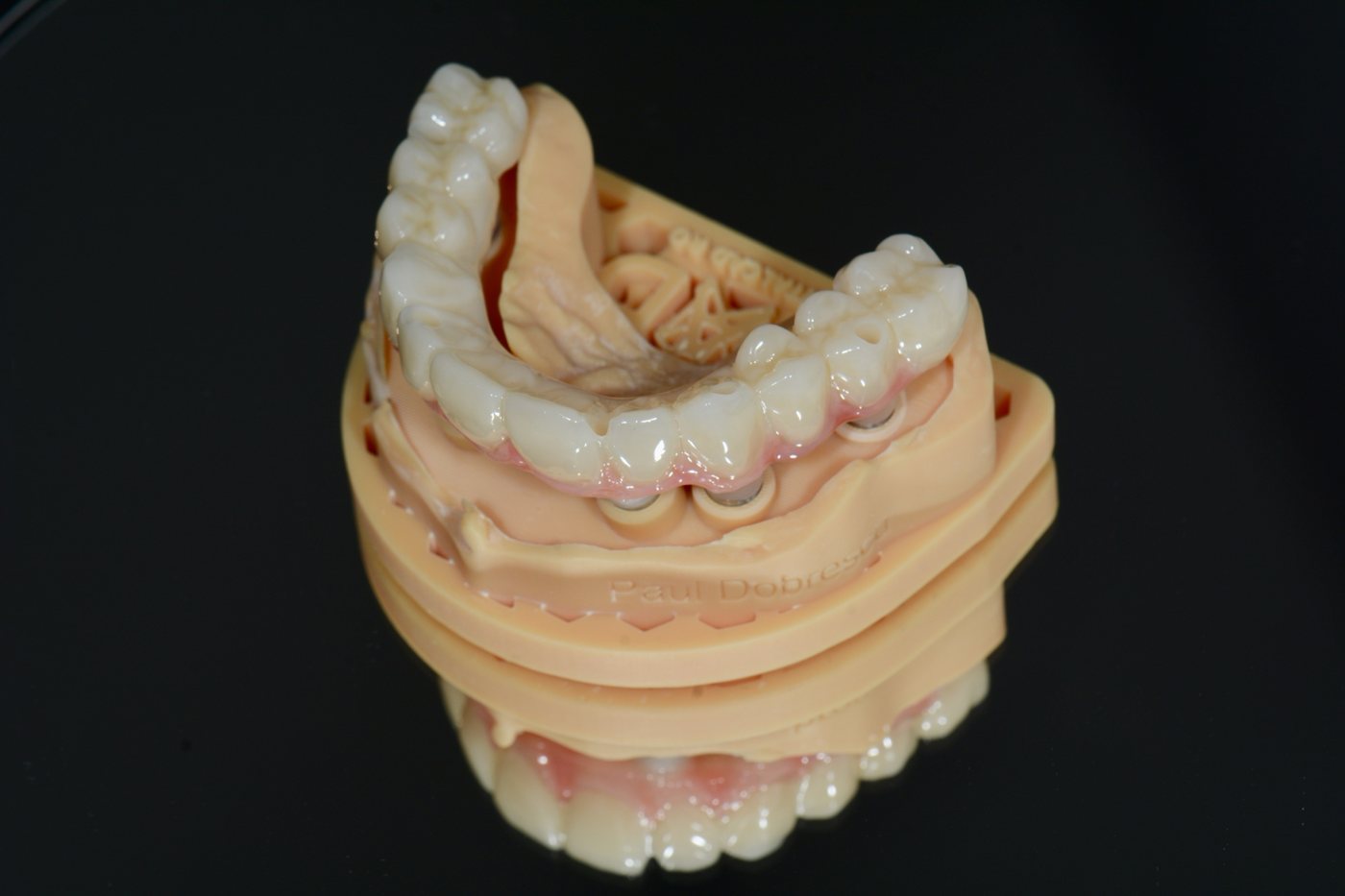
After scanning, the 3D model goes to the laboratory together with the photographs I take at every stage. The photographs show the technician the shape, colour and translucency of the neighbouring teeth, information an impression alone cannot convey.
Zirconia frameworks are designed digitally and milled, while the porcelain is added and finished by hand by the ceramist. Feldspathic veneers are built entirely by hand. For aesthetic work, the proposed shape can be checked directly on the teeth before the final restoration, with a mock-up or try-ins.
How prosthetic treatment works
- Consultation. I examine the teeth, gums and bite, take the necessary X-rays and the initial photographs.
- Treatment plan. I explain the options, the proposed materials, the stages and the cost.
- Preparatory treatment. Gum treatment, root canal treatment or core build-ups are carried out before the restoration.
- Tooth preparation and scanning. The teeth are prepared under local anaesthetic, as conservatively as possible, and then I take the intraoral scan.
- Temporary restoration. Until the final restoration is ready, the teeth are protected by temporaries.
- Try-in and cementation. I check the fit, bite and colour, then the restoration is cemented permanently.
- Regular check-ups. You return for a check a few weeks later, then usually every six months.
Longevity and care
Well-made ceramic restorations that are properly looked after can last many years. Longevity depends on the health of the teeth and gums underneath, oral hygiene, regular check-ups and protection in cases of bruxism.
- brushing twice a day, paying attention to the gum line
- daily cleaning between the teeth and under bridges, with floss, interdental brushes or a water flosser
- regular check-ups and professional cleaning
- a night guard, if you grind your teeth
What affects the cost
The cost of prosthetic treatment is set after the consultation. It depends on the number of teeth treated, the type of restoration, the material chosen and any preparatory treatment needed. I present the treatment plan and the cost before we begin.
Frequently asked questions
What is the difference between a veneer and a crown?
A veneer covers only the visible front of the tooth and is used when the tooth is healthy. A crown covers the whole tooth and is used when it is badly damaged, has had root canal treatment or is very intensely discoloured.
Do ceramic restorations look natural?
Yes. Ceramic lets light pass through it much as natural enamel does. Feldspathic porcelain and all-ceramic restorations are the most translucent, while zirconia is more opaque but stronger.
Do you use restorations with metal?
The veneers, crowns and bridges I make are metal-free, so there is no grey line at the gum. In All-on implant restorations, the supporting framework is titanium, covered with zirconia or composite.
Is impression material used?
As a rule, no. I work with intraoral scanning using the 3Shape TRIOS 5, so the impression is digital.
How many visits are needed?
It depends on the restoration. A crown usually takes two visits, one to two weeks apart. Aesthetic work and cases involving several teeth may need more stages.
Can I have restorations if I have gum problems?
Yes, but only once the gum disease has been treated and is under control. A restoration placed on inflamed gums does not last.
This page provides general information and does not replace a consultation and clinical examination. Treatment is recommended only after an individual assessment.

Dentist with over 20 years of practice dedicated to prosthodontics and dental aesthetics. Founder of ARTeeth Dental Clinic, Bucharest.
At your first consultation I examine your teeth and gums, take the necessary X-rays and an intraoral scan. Based on them, I propose a treatment plan and explain, for each tooth, which restoration and material I recommend.