Dental implants replace missing teeth, from a single tooth to a full arch. I obtained my certification in implantology in 2007, and at ARTeeth Dental Clinic in Bucharest we plan every implant with a CT scan, using the scanner we have in the clinic.
- A dental implant is an artificial titanium root that integrates with the bone and supports a crown, a bridge or a full-arch restoration.
- We have a CT scanner in the clinic. We use it for treatment planning and to check the implants once placement is complete.
- We use Dentium, Megagen, Bredent, BioHorizons and Straumann implants.
- For All-on restorations, the temporary restoration is fitted about 24 hours after implant placement, and the final restoration is made after almost six more months.
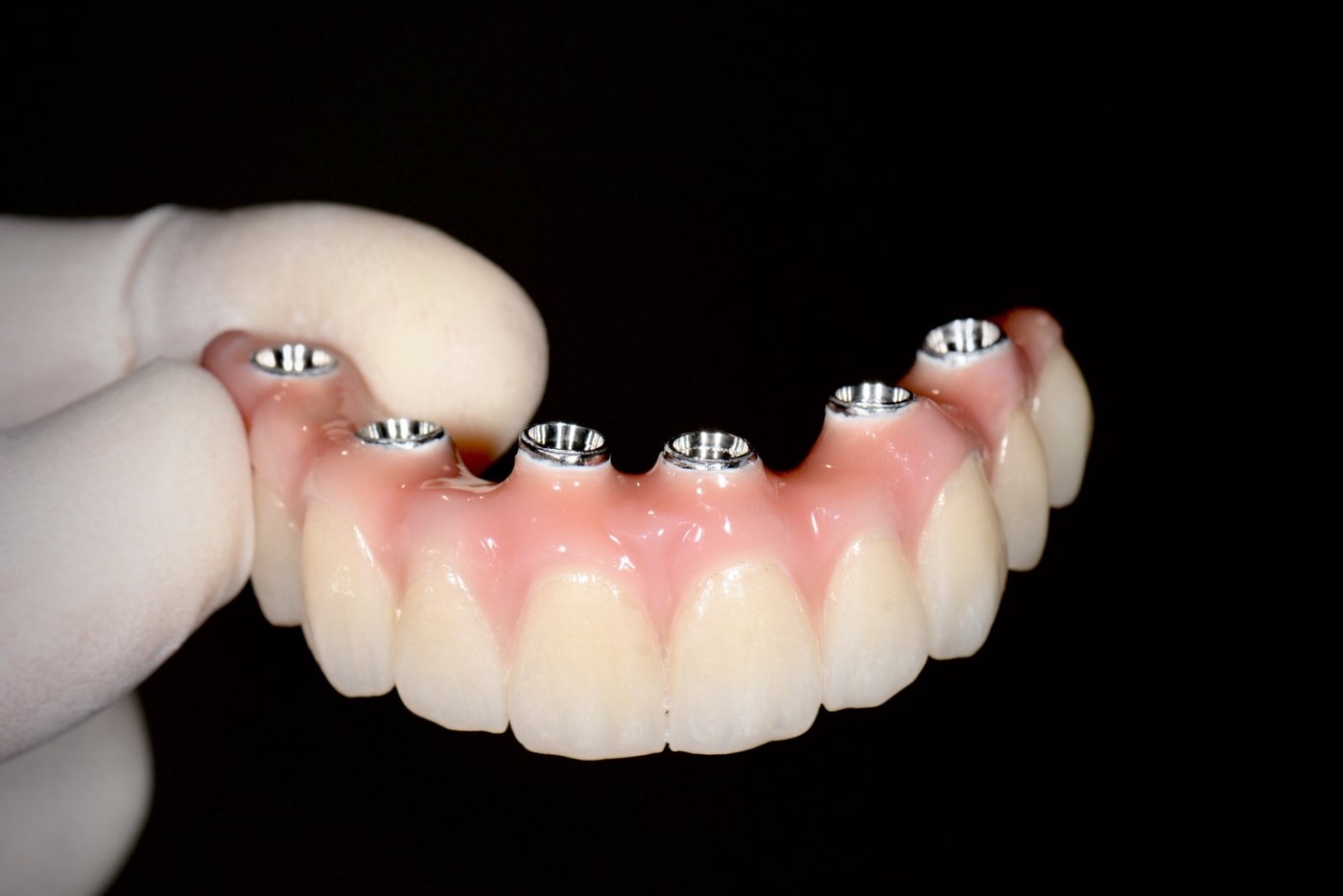
What is a dental implant?
A dental implant is a titanium screw placed in the upper or lower jawbone, where it takes over the role of a tooth root. In the months after placement, bone forms around the implant and holds it firmly in place, a process called osseointegration. The prosthetic restoration is then attached to the implant: a crown, a bridge or a full-arch restoration.
Unlike a conventional bridge, an implant does not require the neighbouring teeth to be prepared.
When are implants recommended?
- a single tooth is missing and the neighbouring teeth are healthy
- several teeth are missing and a bridge on natural teeth is not possible or not desirable
- all the teeth in an arch are missing, or the remaining teeth cannot be saved
- a removable denture is no longer stable or comfortable
Planning with CT
We have a CT scanner in the clinic, and the CT scan is the basis of the treatment plan. The 3D images show the height and width of the bone and the position of the nerves and maxillary sinuses, so we can decide the position, length and diameter of each implant before the procedure.
We also use the CT scanner once implant placement is complete, to check the position of the implants. Because the scanner is in the clinic, the scan is done on the spot, with no need to go to a separate imaging centre.
What we assess before implant placement
For an implant to integrate and function over time, we assess several factors:
- bone quantity and quality. When there is not enough bone, bone grafting or a sinus lift may be needed before the implant or in the same session.
- gum health. Periodontal disease is treated before implants are placed.
- general health and medication. Some uncontrolled conditions, such as poorly controlled diabetes, and some medicines that affect bone metabolism call for careful assessment and sometimes cooperation with your doctor.
- smoking, which increases the risk of complications and implant loss.
- bruxism, which overloads restorations and must be taken into account when planning.
Based on this assessment, I tell you whether the implant can be placed straight away, whether preparatory treatment is needed, or whether another solution would suit you better.
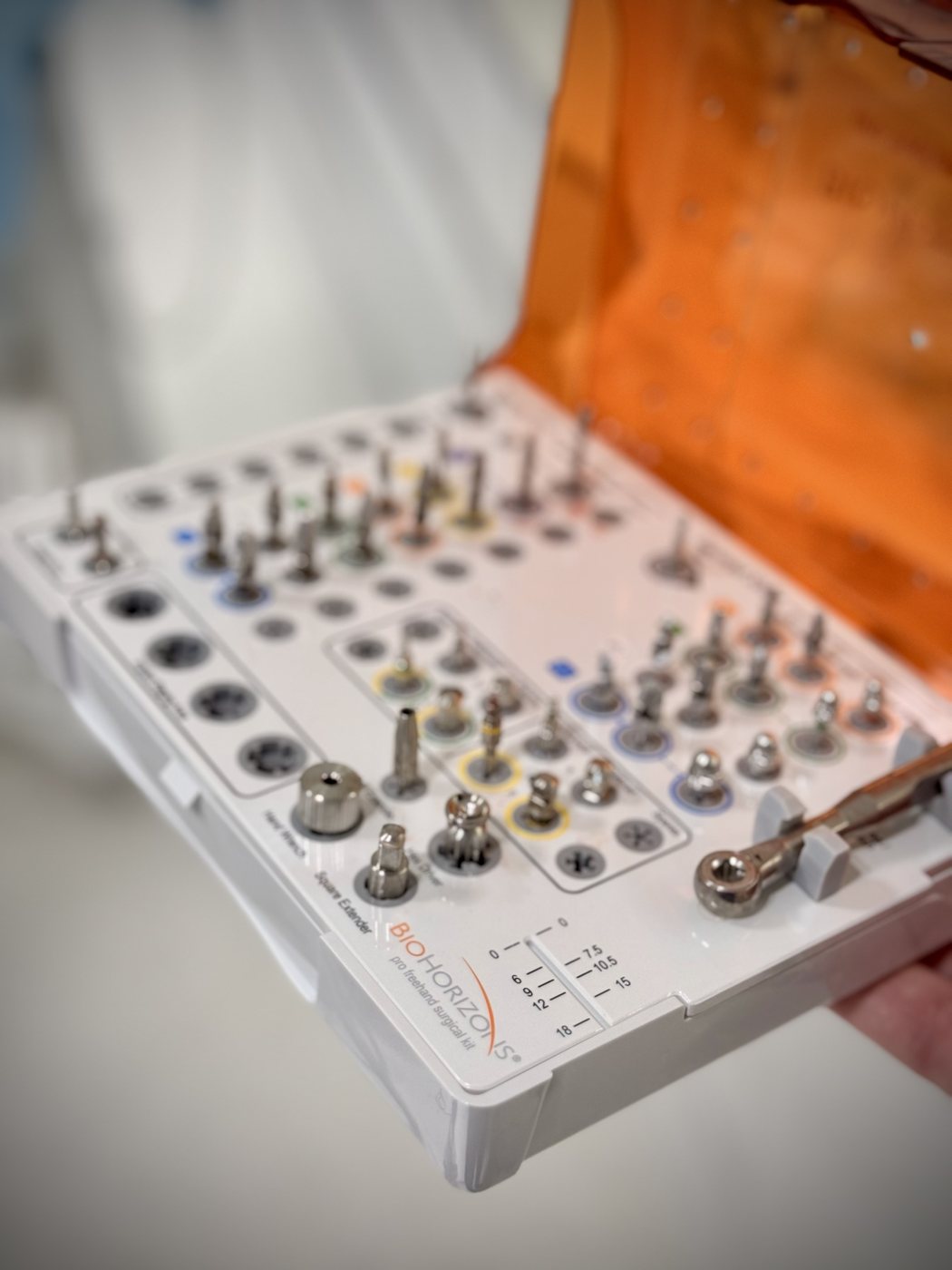
Which implants do we use?
We use implants from several manufacturers: Dentium, Megagen, Bredent, BioHorizons and Straumann.
A single implant, step by step
- Consultation and CT scan. I examine the area, we talk about what you would like and we take the CT scan in the clinic.
- Treatment plan. Based on the scan, we decide the position and size of the implant and whether additional procedures, such as bone grafting, are needed.
- Implant placement. The procedure is carried out under local anaesthetic. Afterwards, we check the position of the implant on a CT scan.
- Healing. Osseointegration follows, usually taking a few months, depending on the bone and the area where the implant was placed.
- Impression. After healing, I take the impression, usually with an intraoral scan. I explain the procedure in the article on intraoral scanning.
- Implant crown. The crown is made together with the dental technician and attached to the implant. I describe the materials I choose on the page about ceramic and zirconia crowns.
- Regular check-ups. You return for regular check-ups so that we can monitor the implant, the gum around it and the restoration.
All-on restorations: a full arch on implants
When all the teeth in an arch are missing, or the remaining teeth cannot be saved, the whole arch can be restored with a fixed restoration supported by a small number of implants. These restorations are known as All-on.
- Planning with CT. We decide the number and position of the implants so that they can support the full-arch restoration.
- Implant placement and impression. After the implants are placed, I take an impression or scan for the temporary restoration.
- Temporary restoration. The fixed temporary restoration is fitted about 24 hours after implant placement.
- Final restoration. After almost six more months, while the implants integrate with the bone, we make the final restoration: a titanium framework covered with zirconia or composite.
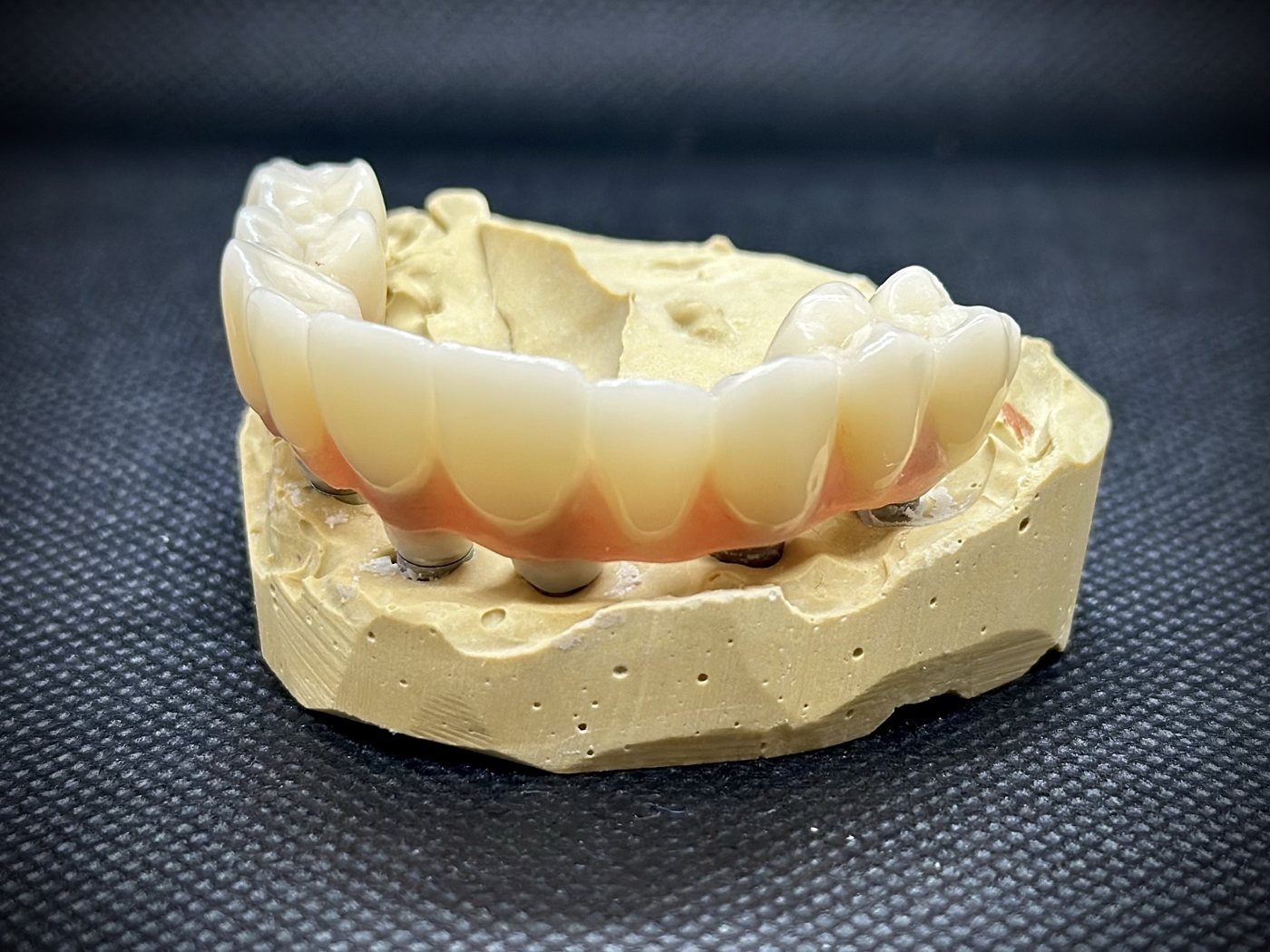
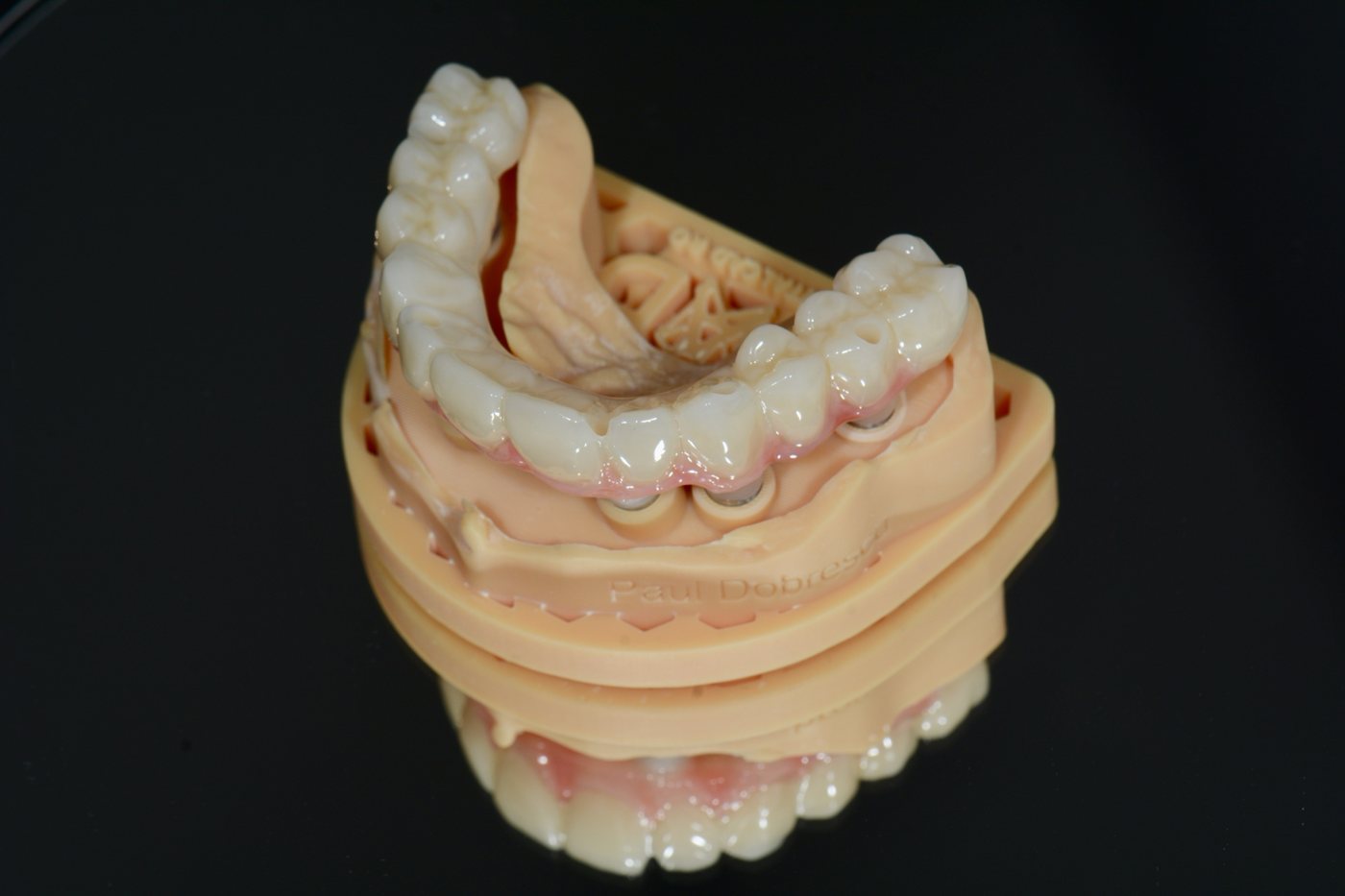
A case treated this way: All-on-6 in the upper jaw, on six implants, and All-on-4 in the lower jaw, on four implants.
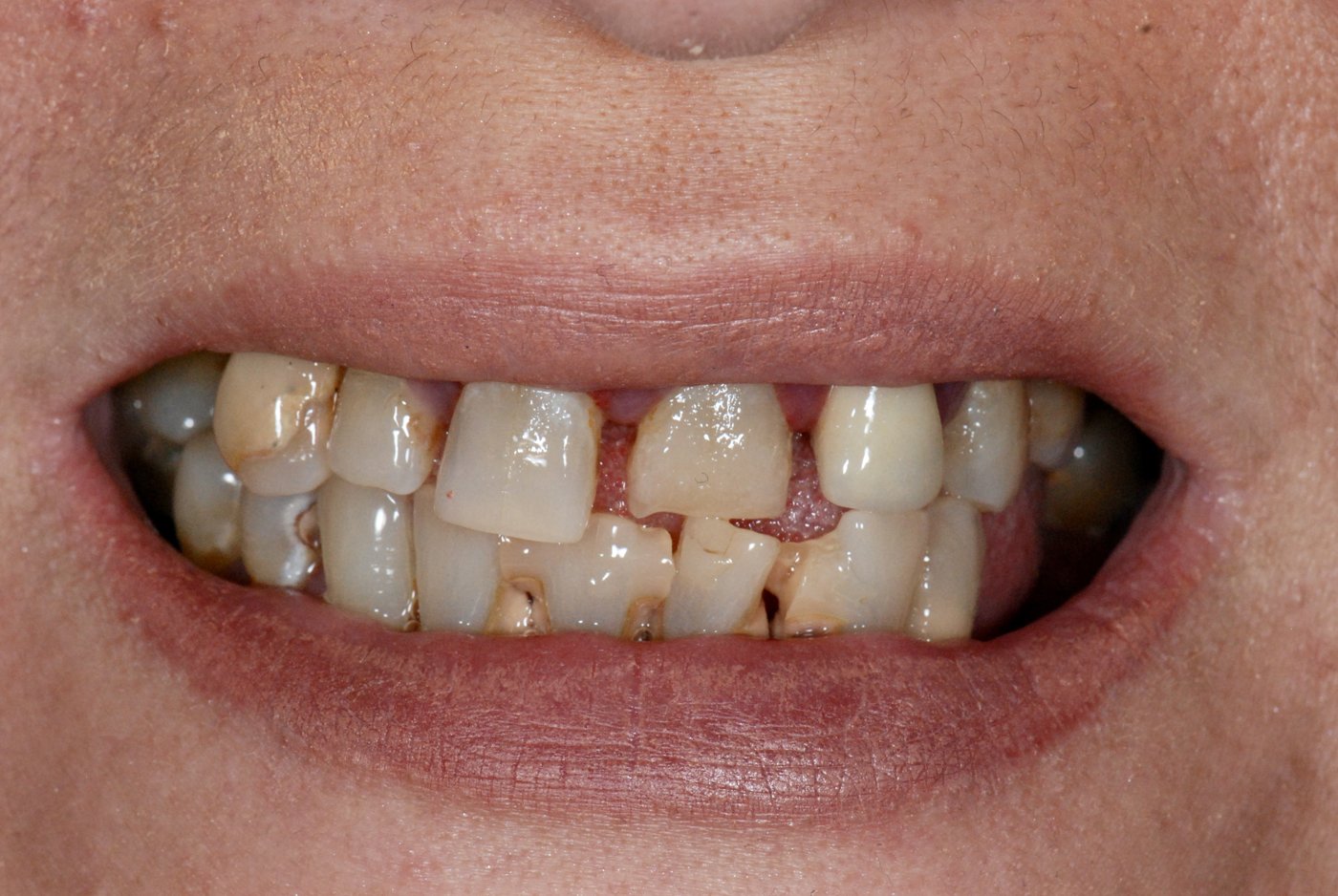
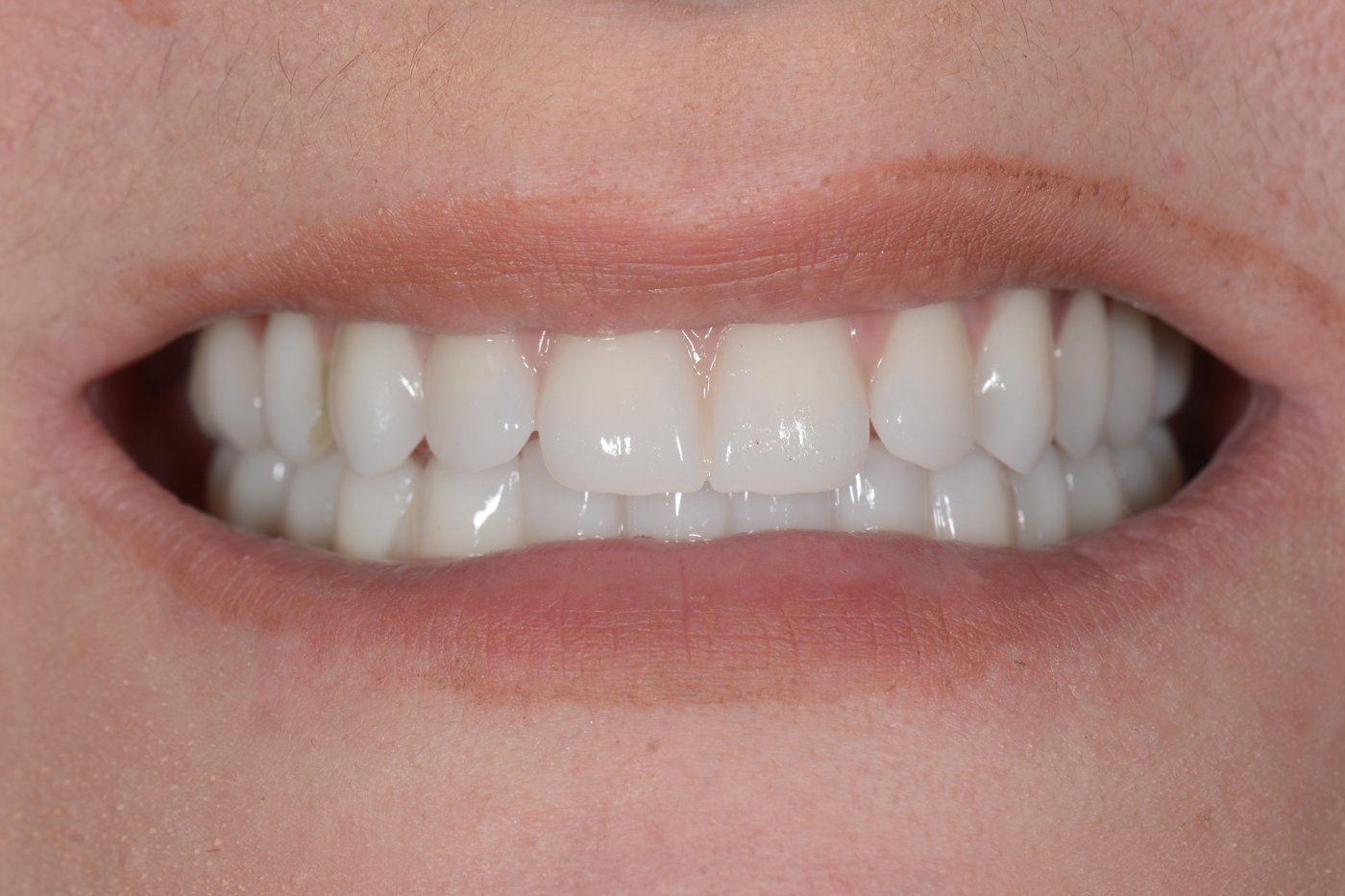
All-on restorations are often part of a broader plan, which I describe on the page about full mouth rehabilitation.
Care and longevity
Long-term clinical studies report survival rates above 90% at ten years for dental implants. An implant cannot decay, but the gum and bone around it can become inflamed if plaque is not removed, and this inflammation, called peri-implantitis, can eventually lead to implant loss.
That is why careful brushing, cleaning around the implants with interdental brushes or a water flosser and regular check-ups matter; at check-ups we also examine and professionally clean the restorations. If you grind your teeth, I may recommend a night guard.
What affects the cost of treatment?
The cost is set after the consultation and CT scan. It depends on the number of implants, any additional procedures such as bone grafting, the type of restoration and the materials chosen. I present the treatment plan and the cost before we begin.
Frequently asked questions
Does implant placement hurt?
The procedure is carried out under local anaesthetic, so you should not feel pain during it. Some discomfort may follow in the next few days, usually controlled with the recommended medication.
Will I need a CT scan?
Yes. We have a CT scanner in the clinic and use it both for treatment planning and to check the implants once placement is complete.
Which implants do you use?
We use Dentium, Megagen, Bredent, BioHorizons and Straumann implants.
Can I have fixed teeth straight after implant placement?
For All-on restorations, the fixed temporary restoration is fitted about 24 hours after implant placement. The final restoration is made after almost six more months.
What is the final All-on restoration made of?
A titanium framework covered with zirconia or composite.
How long does treatment for a single implant take?
Usually a few months, because the implant needs time to integrate with the bone before it receives the crown. The exact duration depends on the bone and the area where the implant is placed.
This page provides general information and does not replace a consultation and clinical examination. Treatment is recommended only after an individual assessment.

Dentist with over 20 years of practice dedicated to prosthodontics and dental aesthetics. Certified in implantology since 2007. Founder of ARTeeth Dental Clinic, Bucharest.
At your first consultation I examine your teeth and gums and, if needed, we take a CT scan right in the clinic. Based on it, I explain which solution I recommend, how many stages it involves and how long it takes.