Full mouth rehabilitation means restoring the function and appearance of the teeth when the problems go beyond a single tooth. At ARTeeth Dental Clinic in Bucharest I coordinate a team of specialist dentists from different fields of dentistry, and we plan and treat complex cases together.
- Full mouth rehabilitation is for situations where several teeth are affected: missing teeth, damaged or worn teeth, old restorations that need replacing, or a changed bite.
- Treatment begins with a full assessment and a plan agreed before any procedure.
- Depending on the case, the plan may include periodontal treatment, root canal treatment, orthodontics, oral surgery and implants, alongside prosthodontics.
- Treatment is carried out in stages, and their order matters as much as each stage itself.
What is full mouth rehabilitation?
Full mouth rehabilitation is a planned treatment for all or most of the teeth. The aim is for the patient to chew well and comfortably, to have a stable bite and a natural-looking smile, and for the result to last.
What sets it apart from routine treatment is not the number of restorations but the way they are planned. Each procedure has its place in a single plan, so that the teeth, gums, bite and restorations work together.
When is it needed?
- several teeth are missing and chewing has become difficult
- the teeth are severely worn, for example because of bruxism, and have lost height
- several old restorations are damaged or no longer look right
- several problems occur together: decay, gum disease, missing teeth or teeth that have shifted
- the bite has changed over time and the teeth no longer meet correctly
Why we work as a team
A complex case usually involves several fields of dentistry. The gums need to be healthy before prosthetic work begins, some teeth need root canal treatment, others need extraction, and missing teeth can be replaced with implants. Sometimes orthodontic treatment carried out first allows a simpler, more conservative prosthetic solution.
At ARTeeth I work with colleagues in these fields, and we agree the treatment plan together. I coordinate the case, so that each stage correctly prepares the next. For the patient, this means a single plan, discussed from the start, and one dentist who follows the treatment from the first step to the last.
How does treatment work?
- Full assessment. I examine the teeth, gums, bite and jaw joints and carry out the necessary X-ray investigations. I take an intraoral scan and photographs, which help with planning. I explain how scanning works in the article on intraoral scanning.
- Treatment plan. We review the case as a team and decide the stages and their order. I present the plan, the possible options and the estimated duration, and treatment begins only once we have agreed on it together.
- Preparatory treatment. Professional cleaning, gum treatment, root canal treatment, extractions or core build-ups as needed. Orthodontic treatment is sometimes carried out at this stage too.
- Implants, if needed. Missing teeth can be replaced with dental implants, which need time to heal before receiving the final restoration.
- Temporary stage. In many cases temporary restorations are used first. They allow the shape, appearance and bite to be checked before the final restorations are made.
- Final restorations. Crowns, bridges, veneers or implant restorations are made together with the dental technician and cemented after checking the fit, bite and colour.
- Regular check-ups. After treatment, you return for regular check-ups so that we can monitor the restorations and gums over time.
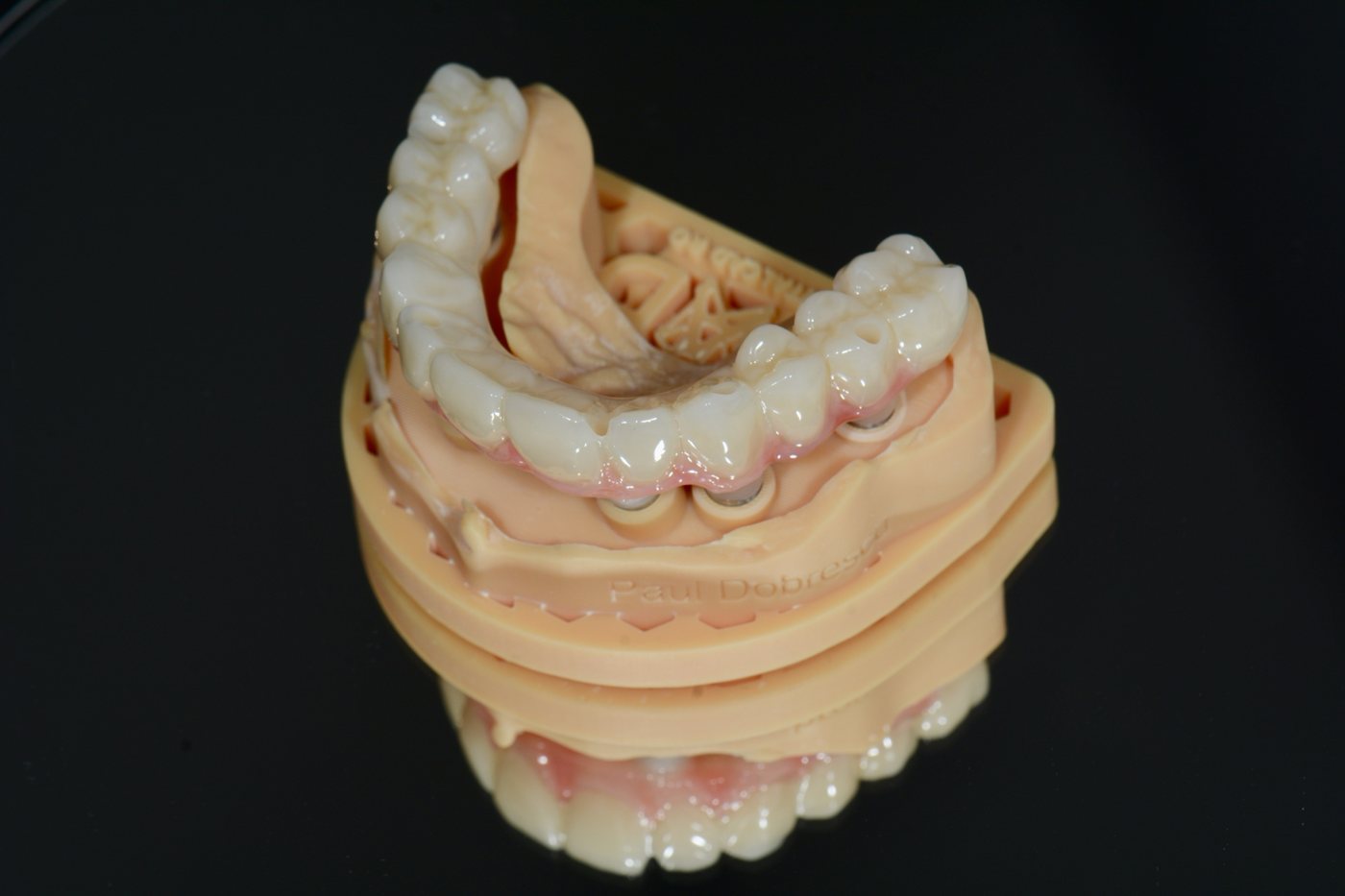
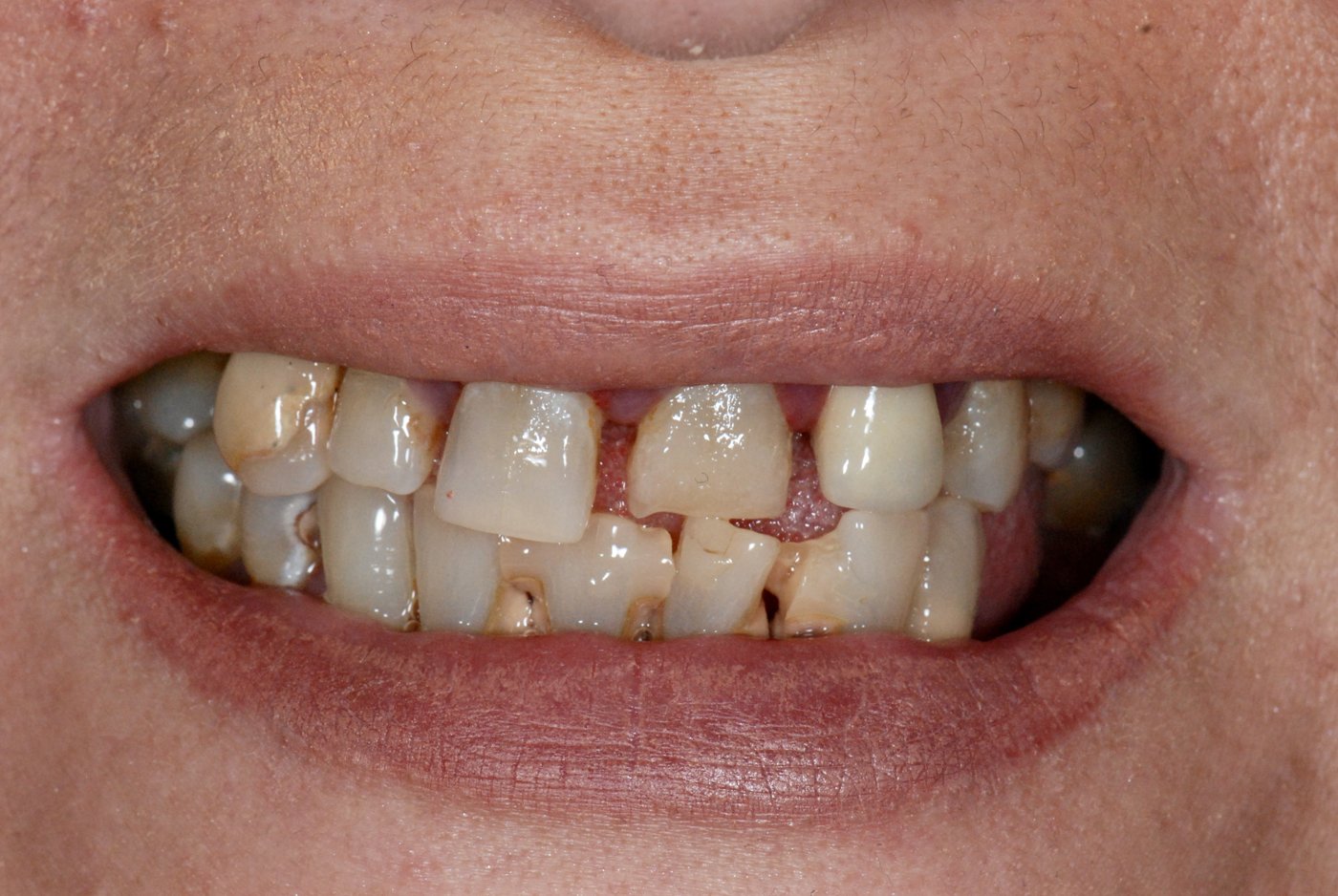
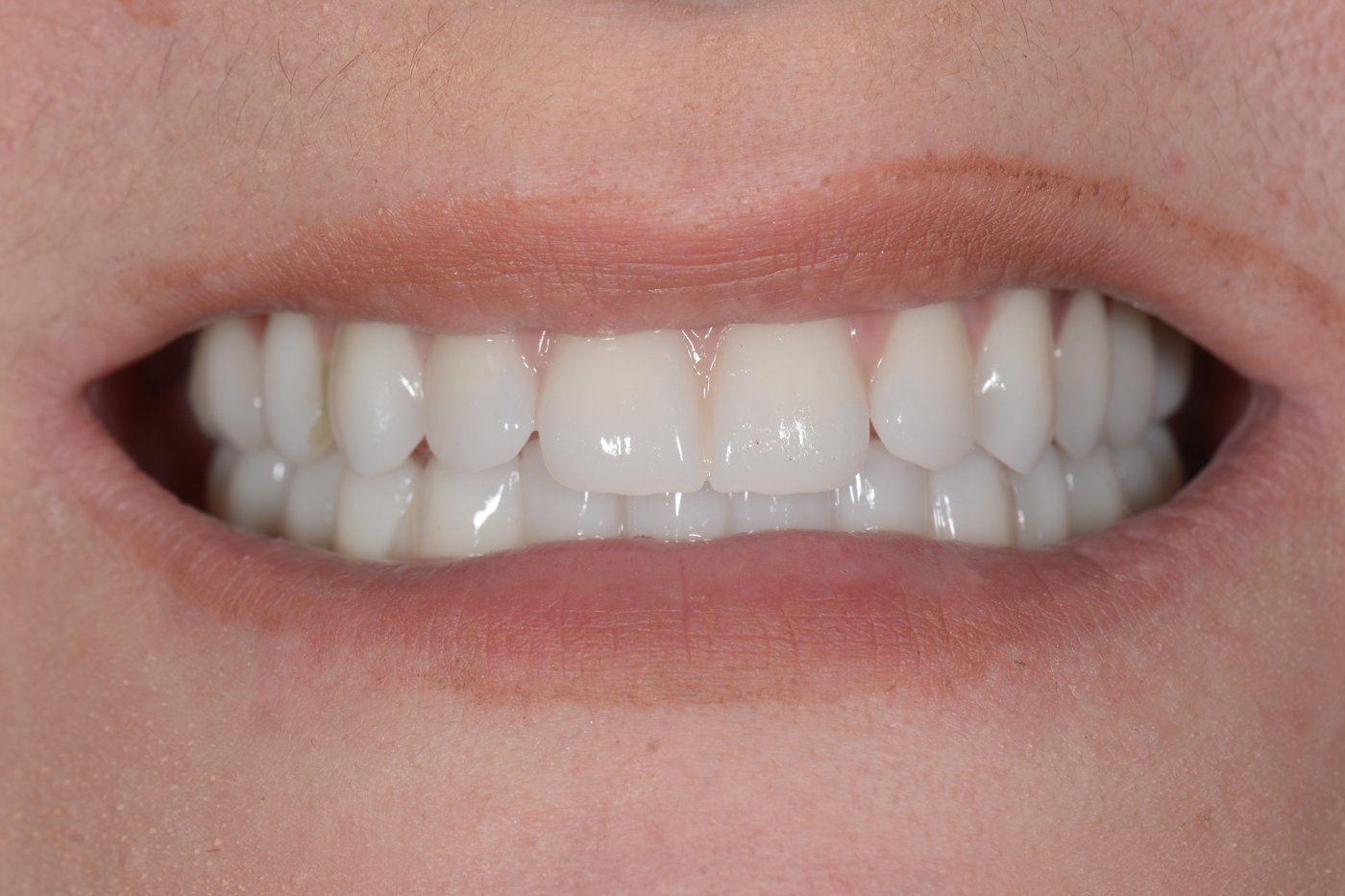
An example of rehabilitation of both arches with implant restorations: All-on-6 in the upper jaw and All-on-4 in the lower jaw.
What can the plan include?
- Crowns and bridges, for damaged teeth or to replace missing ones. I explain how I choose the material on the page about ceramic and zirconia crowns.
- Porcelain veneers, for front teeth that need only changes in shape or colour. You will find details on the page about porcelain veneers.
- Implant restorations, from a single crown to full-arch restorations. You will find details on the page about dental implants.
- Composite restorations, inlays and onlays, for teeth that can be restored more conservatively.
Different solutions can be combined in the same arch. The choice is made for each tooth individually, according to its condition and the overall plan.
How long does it take?
The duration depends on the complexity of the case and the treatment needed. A plan that includes gum treatment, implants or orthodontics can take several months, because some stages need time to heal. I tell you from the start what the estimated duration is and what happens at each stage, and in the meantime you usually have temporary restorations.
After treatment
A successful rehabilitation needs maintenance. Careful oral hygiene, cleaning between the teeth and regular check-ups are essential. If you grind your teeth, I may recommend a night guard to protect the restorations and your natural teeth.
What affects the cost of treatment?
The cost is set after the assessment. It depends on the number and type of treatments, the materials chosen and the stages needed. I present the treatment plan and the cost before we begin.
Frequently asked questions
How do I know if I need full mouth rehabilitation?
If you have several missing or damaged teeth, worn teeth, failing old restorations or difficulty chewing, a full assessment is worthwhile. At your consultation I tell you which treatment would be needed and whether a broader plan is required.
Do I have to have all the treatment at once?
No. Treatment is carried out in stages, in an order agreed from the start. Some stages need time to heal before moving on to the next.
Will I be without teeth during treatment?
As a rule, no. Temporary restorations are used during treatment, so you can eat and smile normally.
Who carries out the treatment?
The plan is agreed as a team, with colleagues from the fields the case requires. I coordinate the treatment and follow every stage through to the final restorations.
Is impression material used?
As a rule, no. I work with intraoral scanning, so the impression is digital.
How long does a full mouth rehabilitation last?
Longevity depends on gum health, oral hygiene, regular check-ups and protecting the restorations in cases of bruxism. With proper care, the restorations can function for many years.
This page provides general information and does not replace a consultation and clinical examination. Treatment is recommended only after an individual assessment.

Dentist with over 20 years of practice dedicated to prosthodontics and dental aesthetics. Founder of ARTeeth Dental Clinic, Bucharest.
At your first consultation I examine all your teeth, carry out the necessary investigations and take a digital scan. Based on them, I present a staged treatment plan before any treatment begins.