Before aesthetic treatment, the most important thing is that the dentist and the patient have the same result in mind. Digital smile design lets me plan the shape, proportions and position of the teeth from photographs and an intraoral scan, and then show you the proposed shape directly on your teeth, before any preparation.
- Digital smile design is computer-based planning of a new smile, based on photographs of the face and teeth and on an intraoral scan.
- I analyse facial proportions, the lip line, and the shape, size and colour of the teeth.
- The proposed shape is transferred onto the teeth with a mock-up, so you can see it in the mirror before treatment.
- This planning is the basis for aesthetic treatment: veneers, crowns on the front teeth or complex rehabilitation.
What is digital smile design?
It is the planning stage that comes before aesthetic treatment. Using photographs and the 3D model from the scan, the smile is analysed and redesigned digitally: the length and width of the teeth, their outline, the alignment of the incisal edges and their relationship to the lips and face.
Digital design is not a treatment in itself. It is the plan from which the veneers, crowns or other restorations are then made, so that the result is the one discussed from the start.
Why I plan digitally
- You see the proposed shape before treatment. You can say what you like and what you would change before the teeth are prepared.
- Clearer communication. We discuss real images, not just words.
- More conservative treatment. Knowing the final shape in advance, I prepare the teeth only as much as needed.
- Precise work with the laboratory. The technician receives the photographs, the scan and the approved plan, so the final restoration follows the shape we agreed.
What I analyse
- facial proportions and the midline
- the lip line, and how much of the teeth and gums shows when you smile and speak
- the shape, size and proportions of each tooth
- the colour and translucency of the teeth
- the gum outline
- the bite, so that the new shape works properly, not just looks good
How it works, step by step
- Consultation. We talk about what bothers you about your smile and what you would like. I examine your teeth, gums and bite.
- Photographs. I photograph your face and teeth from several angles, at rest and smiling.
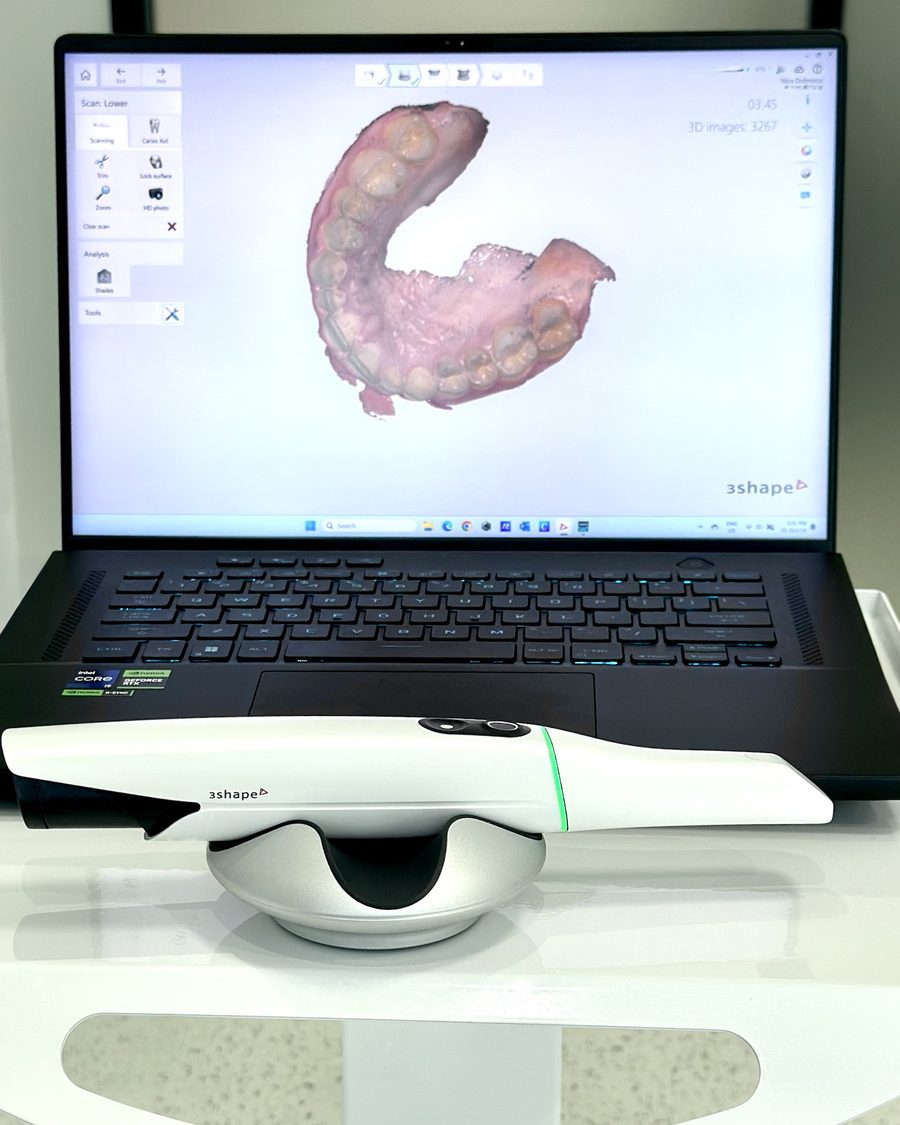
- Intraoral scan. I record your teeth digitally, with no impression material. I explain the procedure in the article on intraoral scanning.
- Digital planning. Based on the photographs and the scan, I propose the shape and proportions of the new teeth.
- Mock-up. The proposed shape is transferred temporarily onto your teeth. You see yourself in the mirror and we can make adjustments.
- Treatment. Once we agree on the shape, I make the actual restorations, such as veneers or crowns, following the approved plan.
The mock-up: the proposed smile on your teeth
A mock-up is a temporary composite model applied over the teeth without any preparation. It reproduces the shape proposed in the digital plan and lets you see the new smile on your own face, and speak and smile with it. This is the best moment to ask for changes, because nothing has yet been permanently prepared.
The mock-up then also guides tooth preparation, so that I remove only what is needed for the final shape. I always work with a mock-up for veneers, as described on the page about porcelain veneers.
When is it useful?
- before porcelain veneers. I describe the material I use in the article on feldspathic porcelain veneers.
- before crowns in the front of the mouth. Details on the page about ceramic and zirconia crowns.
- in complex rehabilitation, when the shape of several teeth or the bite changes. Details on the page about full mouth rehabilitation.
- when orthodontic treatment is followed by aesthetic restorations
For an overview of restorations and materials, see the page about prosthodontics.
What you should know
The digital simulation and the mock-up show the proposed shape and proportions. The final result also depends on the material chosen, the colour of the teeth underneath and how the gums heal, so there may be small differences between the simulation and the final restoration. That is why we also check the shape and colour at the try-in, before cementation.
Frequently asked questions
What is digital smile design?
It is computer-based planning of a new smile, based on photographs and an intraoral scan. It sets the shape, proportions and position of the teeth before aesthetic treatment.
Can I see how my smile will look before treatment?
You can see a very close approximation. The proposed shape is transferred onto your teeth with a mock-up, without any preparation, so you can see it in the mirror and we can make adjustments.
Are the teeth prepared for the mock-up?
No. The mock-up is a temporary model placed over the teeth and is easily removed, with no need for any preparation.
Is digital smile design a separate treatment?
It is the planning stage of aesthetic treatment. The veneers, crowns or other restorations are then made from it.
Will the final result be identical to the simulation?
The shape and proportions follow the approved plan. There may be small differences in colour or detail, which is why we also check the restoration at the try-in, before cementation.
Is impression material used?
As a rule, no. I work with intraoral scanning, so the impression is digital.
This page provides general information and does not replace a consultation and clinical examination. The smile simulation is a planning and communication tool, not a guarantee of the final result.

Dentist with over 20 years of practice dedicated to prosthodontics and dental aesthetics. Founder of ARTeeth Dental Clinic, Bucharest.
At your first consultation I examine your teeth and gums, take photographs and an intraoral scan, and we talk about what you would like. Based on them, I explain what can be changed and with which treatments.