- Periodontitis is a chronic inflammatory disease of the tissues that support the teeth: the gum, the ligament and the bone around the root.
- In Romania it is popularly called "parodontoză". The correct medical term is periodontitis.
- The first signs are often bleeding gums when brushing and bad breath. Later, the gums recede and the teeth become loose.
- It is diagnosed by clinical examination, measurement of the periodontal pockets and X-rays.
- At ARTeeth Dental Clinic, all cases of gum disease are treated by the specialist periodontist in our team.
What is periodontitis?
Teeth are held in the bone by a support system called the periodontium: the gum, the periodontal ligament, the cementum covering the root and the alveolar bone. Periodontitis is chronic inflammation of these tissues, triggered by bacteria in the dental plaque that builds up at the gum line.
The disease usually begins as gingivitis: the gum becomes inflamed, red and bleeds, but the bone is not yet affected. Gingivitis can be reversed with good oral hygiene and professional cleaning. If it is not treated, the inflammation can progress deeper. The gum detaches from the tooth, periodontal pockets form and the bone around the roots is gradually lost. Lost bone does not grow back on its own, and in advanced stages the teeth become loose and can be lost.
Periodontitis or periodontosis?
In everyday Romanian, the disease is known as "parodontoză" (periodontosis). The correct medical term, however, is periodontitis, because the suffix "-itis" indicates inflammation, and the disease is based on chronic inflammation caused by bacteria. When patients say they have "parodontoză", they almost always mean periodontitis.
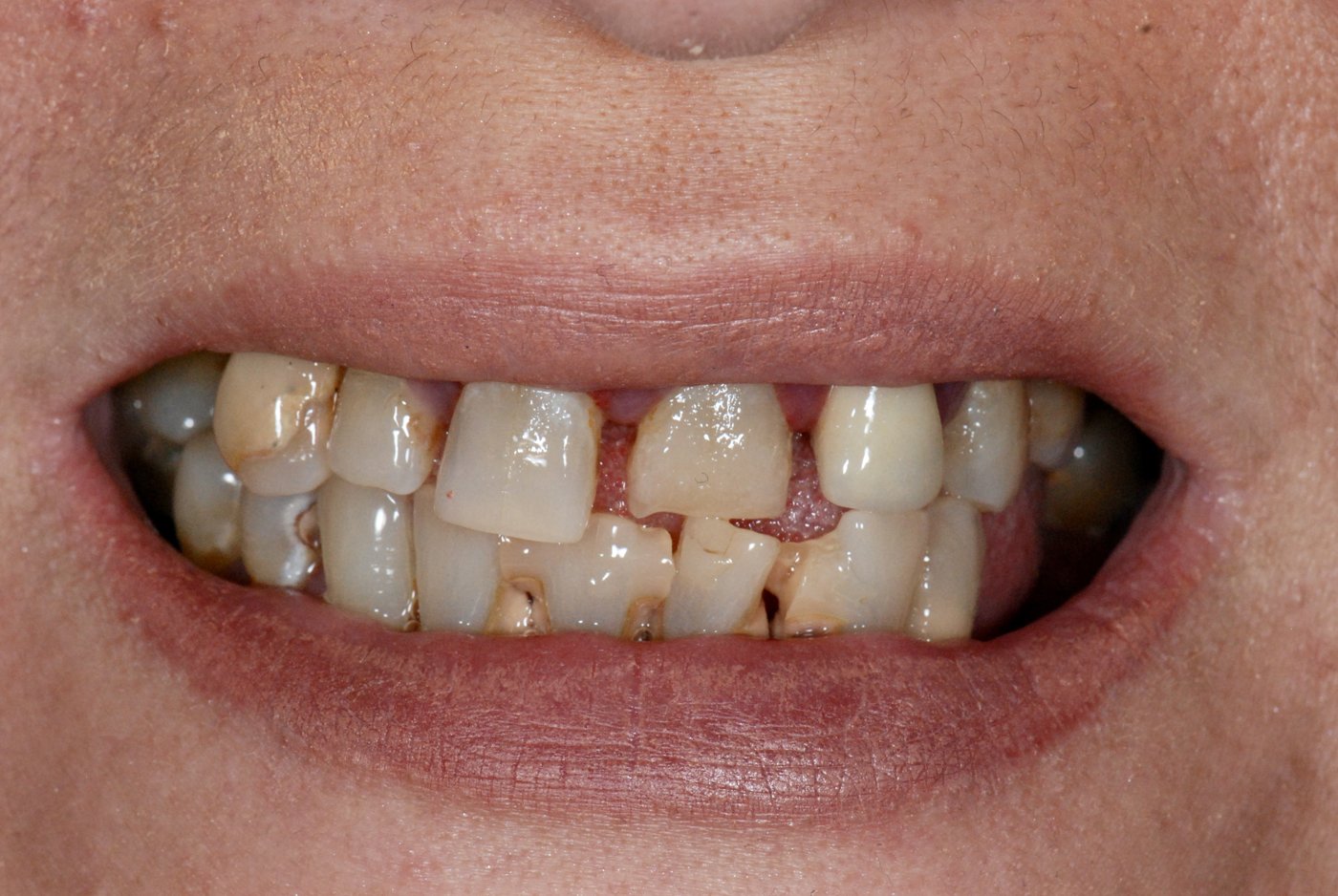
Signs of gum disease
- gums that bleed when brushing or flossing
- red, swollen or tender gums
- bad breath or a persistent unpleasant taste
- receding gums, making the teeth look longer
- tartar deposits at the gum line
- new gaps between the teeth or teeth that have shifted
- loose teeth
- pus at the gum line
In its early stages periodontitis does not hurt, which is why it is often discovered late. In smokers, the gums may not bleed even when the disease is present, because smoking reduces blood flow to the gum.
Causes and risk factors
The main cause is dental plaque that is not properly removed and that, over time, hardens into tartar. Some people, however, are more susceptible than others. Factors that increase the risk or favour progression are:
- smoking, one of the most important risk factors
- diabetes, especially when poorly controlled. Diabetes and periodontitis influence each other in both directions.
- genetic predisposition
- inadequate oral hygiene and missed check-ups
- stress, some medicines and hormonal changes
How it is diagnosed
Diagnosis begins with a clinical consultation. The periodontist examines the gums and uses a special probe to measure the depth of the periodontal pockets around each tooth. In a healthy gum, the groove between gum and tooth is only a few millimetres deep. Deeper pockets show that gum attachment and some bone have been lost.
The examination is completed with X-rays, which show how much bone has been lost, and an assessment of tooth mobility. These findings determine the stage and form of the disease and the choice of treatment.
Treatment of periodontitis
In our clinic, all cases of gum disease are referred to the specialist periodontist in our team. After the consultation and pocket measurement, the periodontist recommends the treatment needed, depending on the stage of the disease:
- Professional cleaning and home-care instruction. Without proper hygiene at home, no treatment gives lasting results.
- Closed curettage (deep cleaning). Tartar and plaque are removed from the roots inside the periodontal pockets, without incisions, under local anaesthetic.
- Open-flap curettage. When the periodontal pockets are deep, the gum is opened in a minor surgical procedure so that the roots and the surrounding bone can be cleaned thoroughly under direct vision. It is done under local anaesthetic.
- Gum grafts and bone and soft-tissue augmentation. In certain situations, these can restore some of the lost tissue or cover roots exposed by gum recession.
Periodontitis is a chronic disease. After treatment, the result is maintained through careful home care and regular check-ups and cleanings, at the intervals recommended by the dentist.
When teeth cannot be saved
In advanced stages, some teeth have lost too much bone to be kept. In these situations, treatment includes extracting them and then replacing the missing teeth, most often with dental implants. Before implants are placed, gum disease must be treated and kept under control, because the bacteria that cause it can also affect the tissues around implants.
One example is the case shown in the article on All-on restorations: a patient with loose teeth, severe gum recession and heavy tartar, treated with fixed restorations on implants in both arches. I describe implants in more detail on the page about dental implants.
Gum disease and dental restorations
Every prosthetic restoration, whether veneers, crowns, bridges or implants, needs healthy gums. A restoration placed on inflamed gums does not fit properly and does not last. That is why, when I see signs of gum disease at a consultation, periodontal treatment comes first and the restorations follow. In complex cases we agree the treatment plan as a team, as described on the page about full mouth rehabilitation.
Prevention and maintenance
- brushing twice a day, paying attention to the gum line
- daily cleaning between the teeth with floss or interdental brushes
- professional cleaning and check-ups, usually every six months or as recommended by your dentist
- stopping smoking
- keeping diabetes under control, together with your doctor
Periodontitis on the podcast
I talked about gum disease in detail on the Dialog Meducativ podcast, episode 40, "The rules of a healthy smile" (in Romanian). You can watch the episode on YouTube.
Frequently asked questions
Are periodontosis and periodontitis the same thing?
In everyday language, yes. The disease is popularly called periodontosis, but the correct medical term is periodontitis, because it is based on chronic inflammation.
Is it normal for my gums to bleed when I brush?
No. Bleeding gums are usually a sign of inflammation, from gingivitis to periodontitis, and are worth having checked at a consultation.
Can periodontitis be cured?
Periodontitis is a chronic disease. Treatment can stop the inflammation and keep the disease under control, but lost bone does not grow back on its own. That is why careful hygiene and regular check-ups after treatment are important.
Does deep cleaning hurt?
Deep cleaning is done under local anaesthetic, so you should not feel pain during it. Afterwards, the gums may be sensitive for a few days.
Can I have implants if I have periodontitis?
Yes, in many cases, but only after the gum disease has been treated and is under control. Otherwise, the inflammation can also affect the tissues around the implants.
Who treats periodontitis at your clinic?
The specialist periodontist in our team. I refer all cases of gum disease to our periodontist, and we carry out prosthetic work once the gums are healthy.
This article provides general information and does not replace a consultation and clinical examination. Gum disease is diagnosed and treated only after an individual assessment.

Dentist with over 20 years of practice dedicated to prosthodontics and dental aesthetics. Founder of ARTeeth Dental Clinic, Bucharest.
Periodontitis caught early is simpler to treat and responds better. At your consultation we examine your gums, and if there are signs of gum disease, the periodontist in our team measures the periodontal pockets and plans the treatment.