- An All-on restoration replaces all the teeth in an arch with a fixed restoration supported by four (All-on-4) or six (All-on-6) implants.
- We plan the implants with CT, using the scanner in our clinic, which we also use to check the implants once placement is complete.
- The fixed temporary restoration is fitted about 24 hours after implant placement.
- After almost six months, the final restoration is made: a titanium framework covered with zirconia or composite.
- The restoration is fixed: it is not removed at home but cleaned like natural teeth, with a few extra tools.
What are All-on restorations?
When all the teeth in an arch are missing, or the remaining teeth cannot be saved, one option is a removable denture. Many patients find it hard to live with: it moves when eating and speaking, covers the palate and has to be taken out for cleaning.
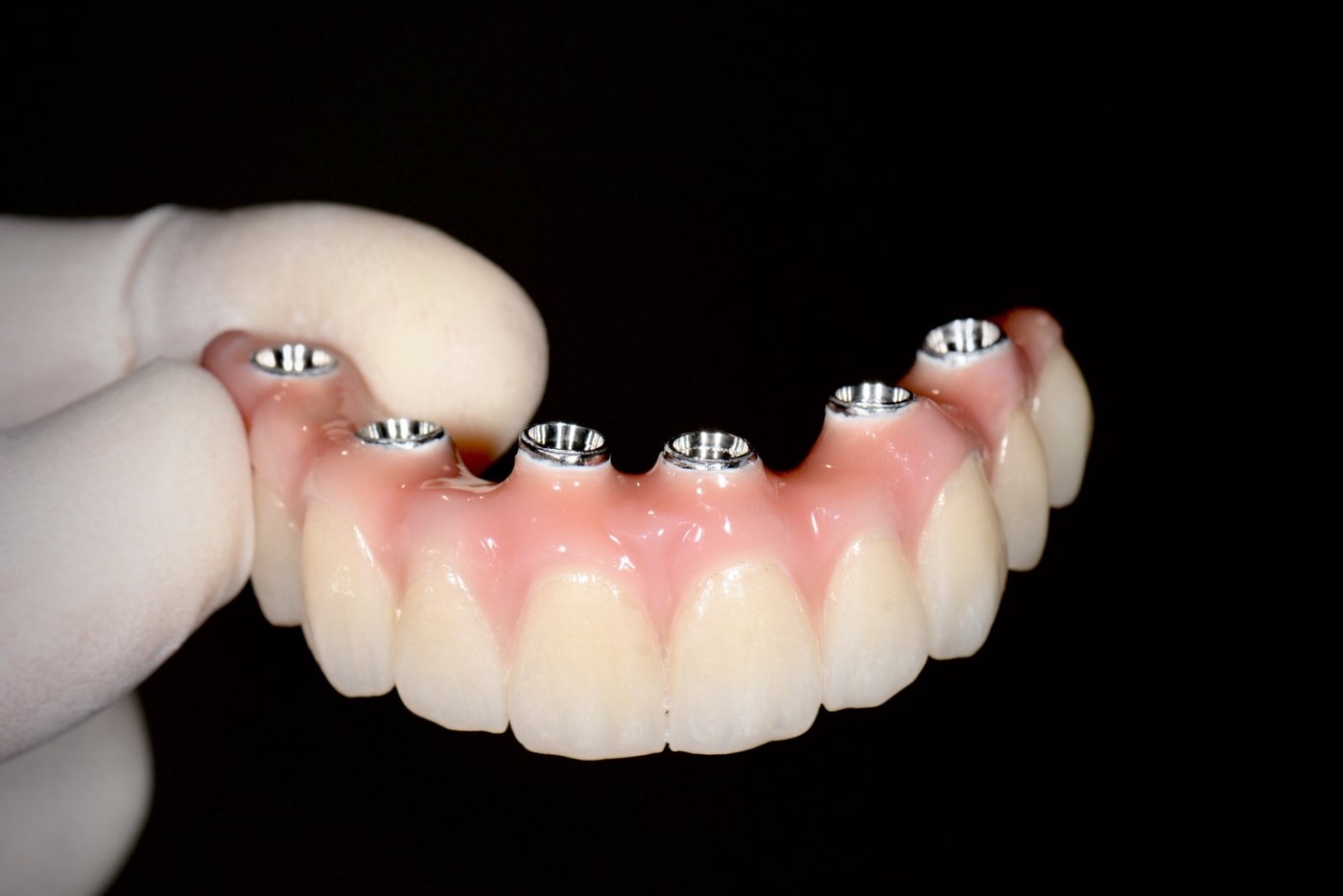
All-on restorations are the fixed alternative. The whole arch of teeth is made as a single restoration, screwed onto a small number of implants. The patient does not remove it, and when eating, speaking and smiling it behaves like a fixed set of teeth.
All-on-4 or All-on-6?
The name refers to the number of implants supporting the restoration: four or six.
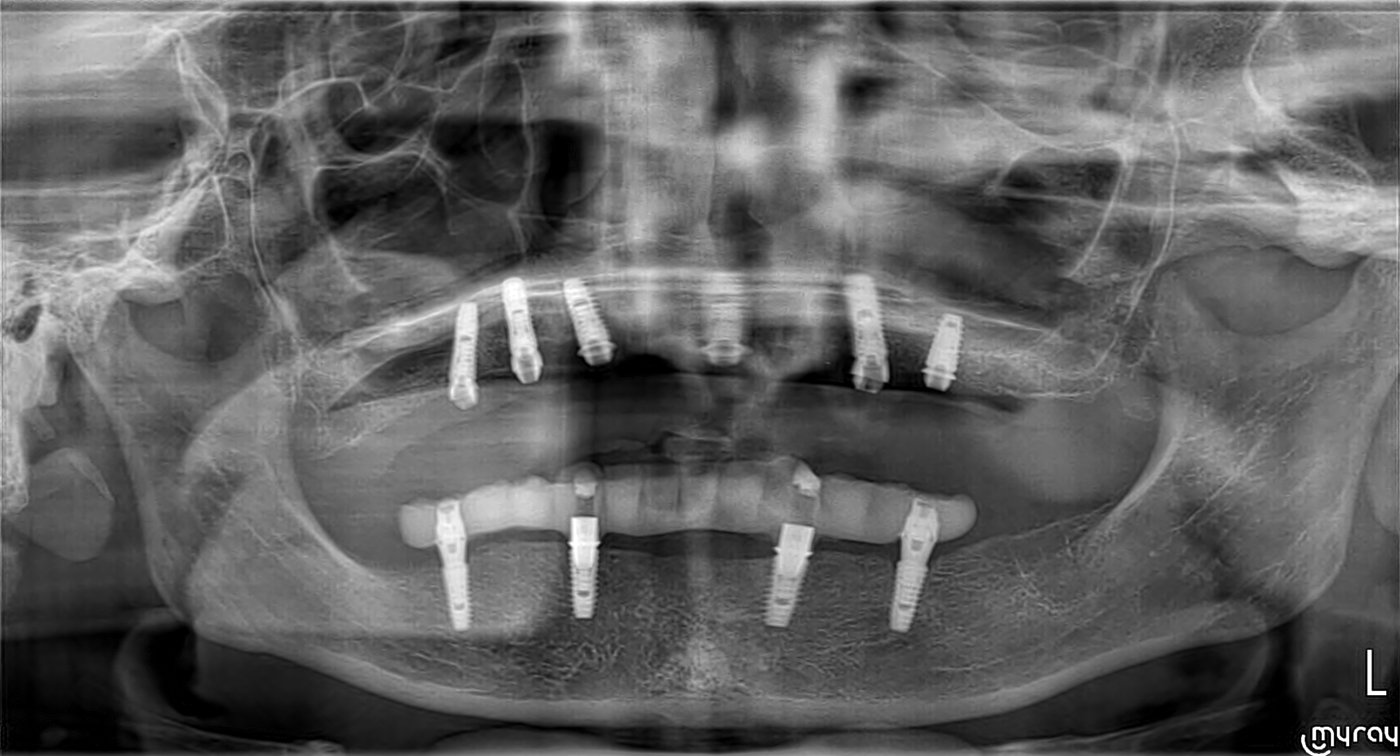
How many implants are needed is decided on the CT scan, according to the quantity and quality of the bone and the forces the restoration will bear. Upper jawbone is generally less dense than lower jawbone, which is why six implants are more often chosen for the upper arch. In the case shown below, the patient received an All-on-6 restoration in the upper jaw and an All-on-4 restoration in the lower jaw.
When are they recommended?
- all the teeth in an arch are missing
- the remaining teeth are severely damaged and cannot be saved
- a removable denture is no longer stable or comfortable
- the patient wants fixed teeth instead of a removable denture
Before treatment we assess general health, medication, smoking and bruxism, because all of them affect healing and how long the restoration lasts. I describe this assessment in more detail on the page about dental implants.
Planning with CT
We have a CT scanner in the clinic, and the treatment plan starts from the CT scan. The 3D images show the height and width of the bone and the position of the sinuses and nerves, so we can decide the number, position and size of the implants. We also use CT to check the position of the implants once placement is complete.
Treatment stages
- Consultation and CT scan. I examine your teeth and gums, we talk about what you would like and we take the CT scan in the clinic.
- Treatment plan. We decide the number and position of the implants and the shape of the future restoration, then I present the plan, the duration and the cost.
- Surgery. Teeth that cannot be saved are extracted and the implants are placed under local anaesthetic. Afterwards, we check the position of the implants on a CT scan.
- Impression for the temporary restoration. After implant placement, I take the impression or scan from which the laboratory makes the temporary restoration. I have written about digital impressions in the article on intraoral scanning.
- Temporary restoration. The fixed temporary restoration is fitted about 24 hours after implant placement. Over the following months, the patient wears it while the implants integrate with the bone.
- Final restoration. After almost six months we make the final restoration: a titanium framework covered with zirconia or composite.
- Regular check-ups. We monitor the implants, the gums around them and the restoration over time, and the restoration is professionally cleaned at check-ups.
A treated case: All-on-6 upper and All-on-4 lower
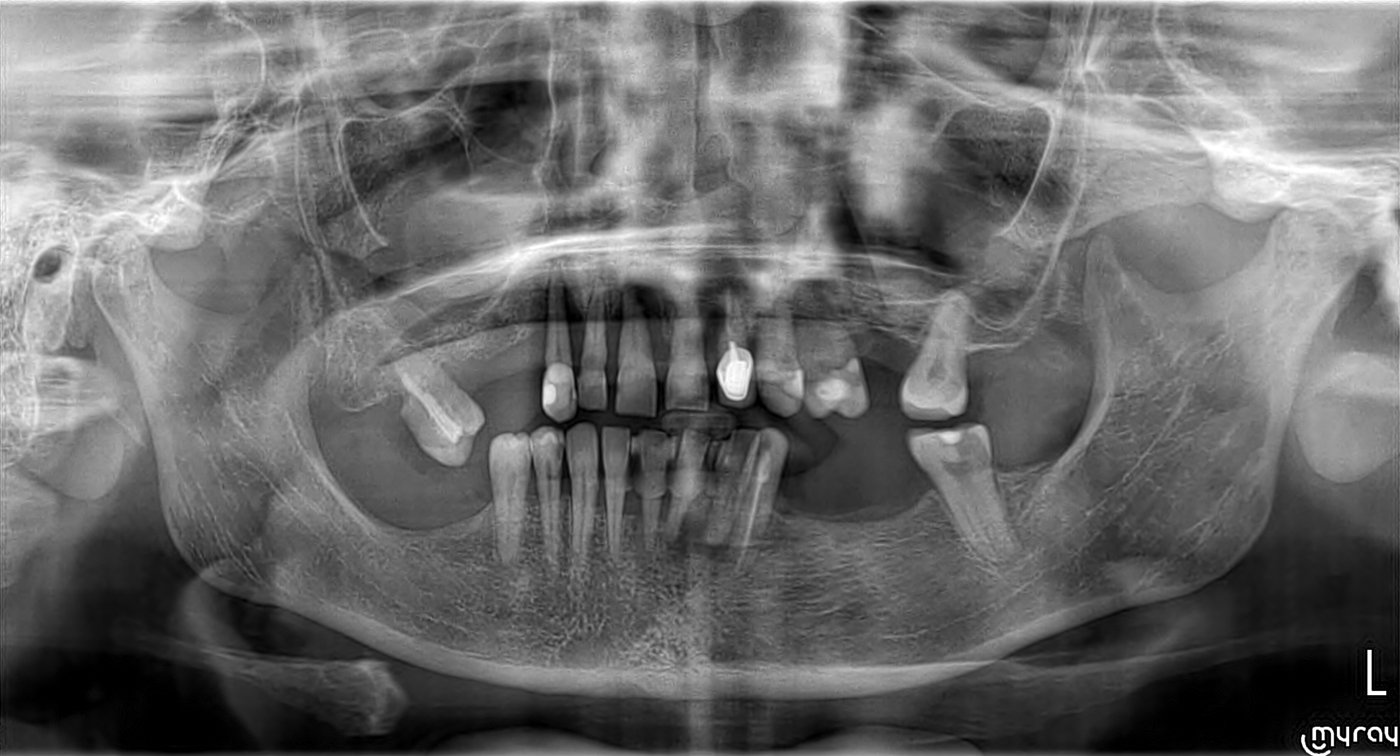
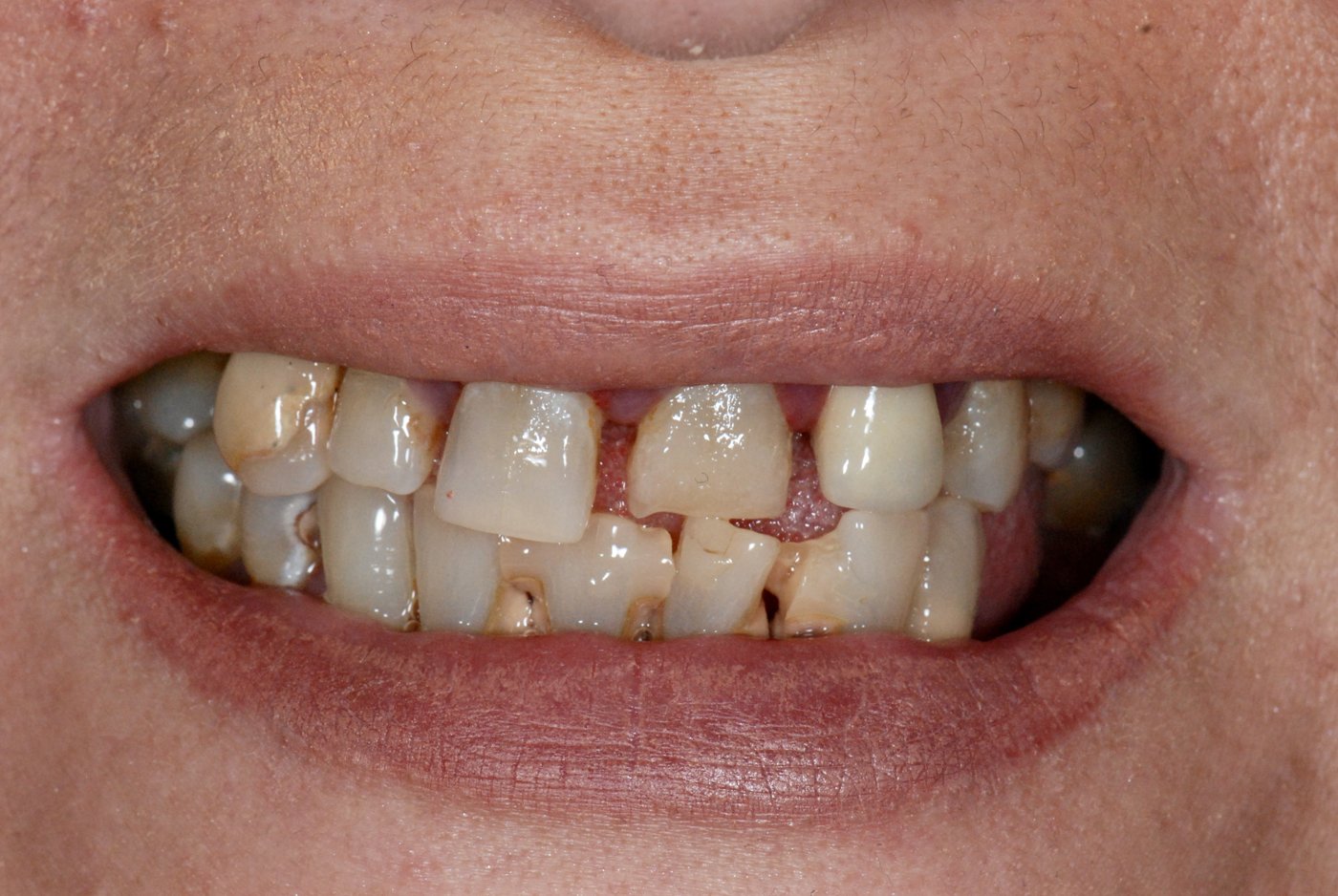
The patient came to us with the remaining teeth in both arches damaged, mobile, with severe gum recession and covered in tartar. The initial X-ray shows the starting point. The X-ray taken after treatment shows the six implants in the upper jaw and the four in the lower jaw.
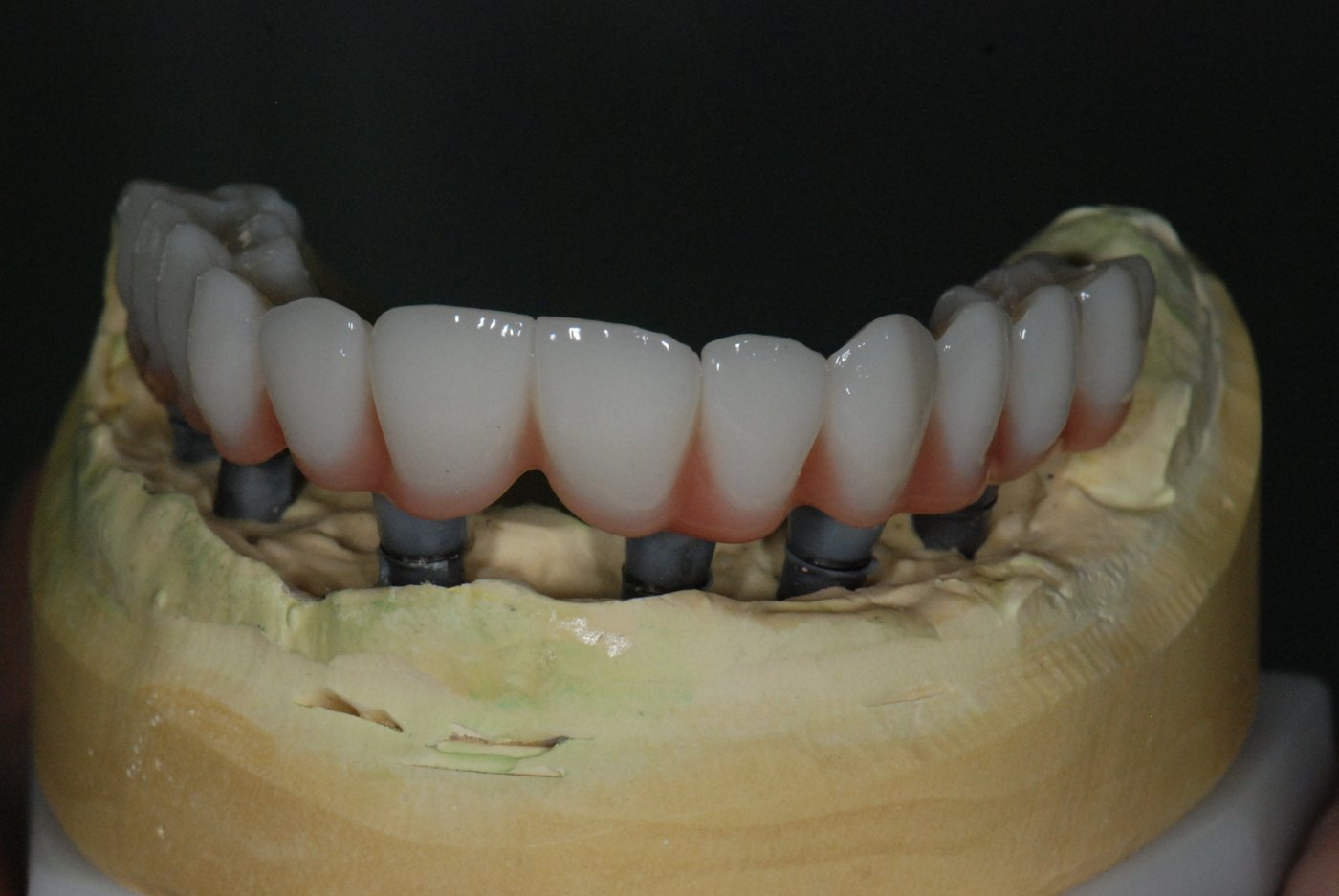
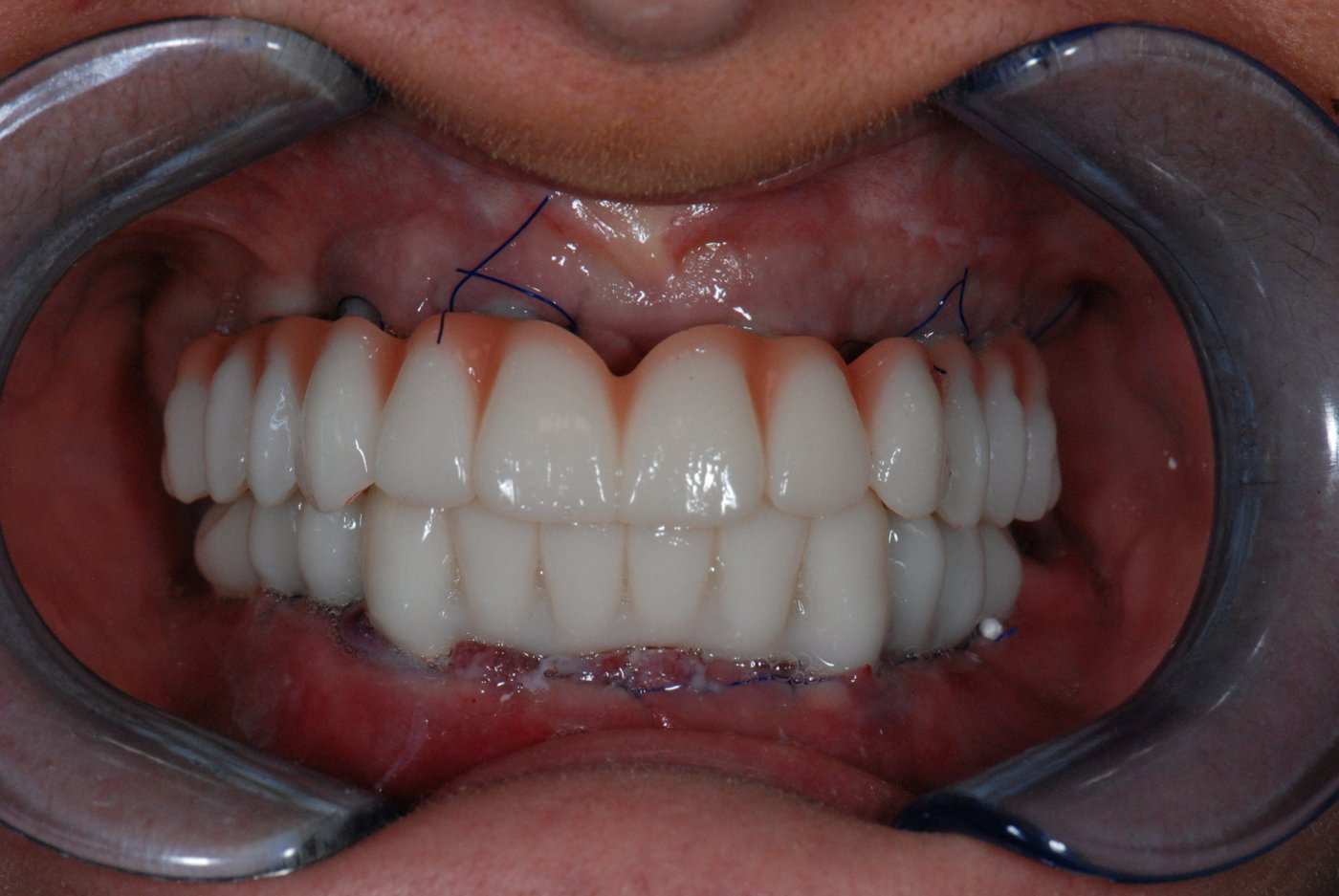
The temporary restorations were made in the laboratory from the impression taken after implant placement and were fixed onto the implants. The patient wore the temporary restorations for six months, until the final restorations were made.
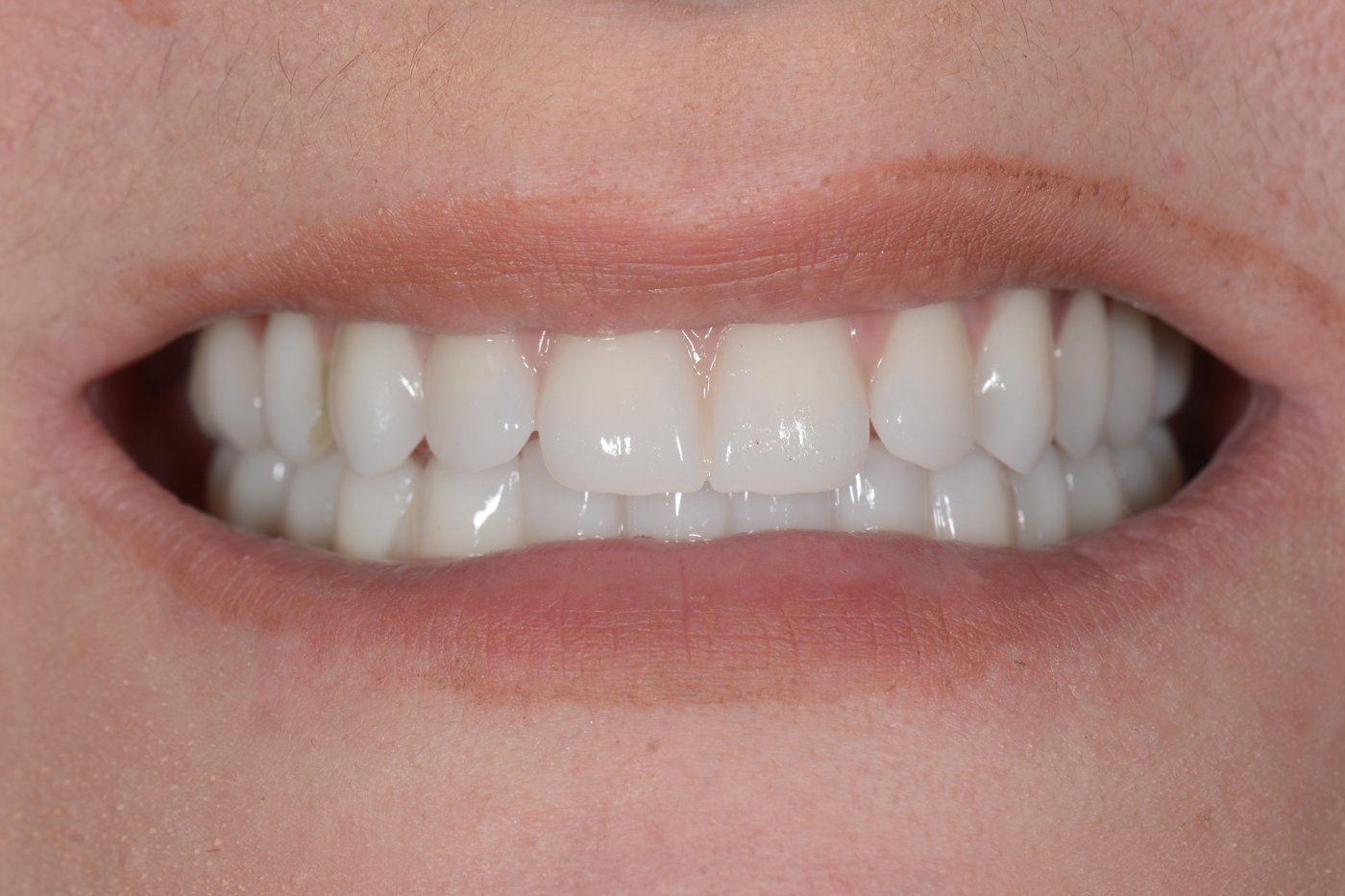
The photographs below show the patient's smile before treatment and after the final restorations were completed.
Treatment like this is part of a full mouth rehabilitation. I describe how we plan these cases as a team on the page about full mouth rehabilitation.
Caring for the restoration
An All-on restoration cannot decay, but the gum around the implants can become inflamed if plaque is not removed. Left untreated, this inflammation, called peri-implantitis, can eventually lead to loss of the bone around the implants.
- brushing twice a day, including the side of the restoration facing the gum
- cleaning under the restoration with interdental brushes, special floss or a water flosser
- regular check-ups, at which we examine the implants and professionally clean the restoration
- a night guard, if you grind your teeth
Frequently asked questions
Will I be without teeth after surgery?
No. The fixed temporary restoration is fitted about 24 hours after implant placement.
How long do I wear the temporary restoration?
Almost six months, while the implants integrate with the bone. The final restoration is made after that.
What is the final restoration made of?
A titanium framework covered with zirconia or composite.
Can I take the restoration out at home?
No. The restoration is fixed onto the implants. Only the dentist can remove it, when needed.
What is the difference between All-on-4 and All-on-6?
The number of implants supporting the restoration: four or six. How many are needed is decided on the CT scan, according to the bone and the forces the restoration will bear.
Is a CT scan taken?
Yes. We have a CT scanner in the clinic and use it both for planning and to check the implants once placement is complete.
This article provides general information and does not replace a consultation and clinical examination. Results may vary from one patient to another.

Dentist with over 20 years of practice dedicated to prosthodontics and dental aesthetics. Certified in implantology since 2007. Founder of ARTeeth Dental Clinic, Bucharest.
At your first consultation I examine your teeth and gums and we take a CT scan right in the clinic. Based on it, I explain which solution I recommend, how many implants would be needed and how treatment works.