- Both natural teeth and implants are used, each supporting its own restorations.
- The plan covers the whole mouth, not each tooth on its own.
- The result is a fixed set of teeth that works well and looks natural.
- Long-term success depends on healthy gums, good hygiene and regular check-ups.
What mixed oral rehabilitation is
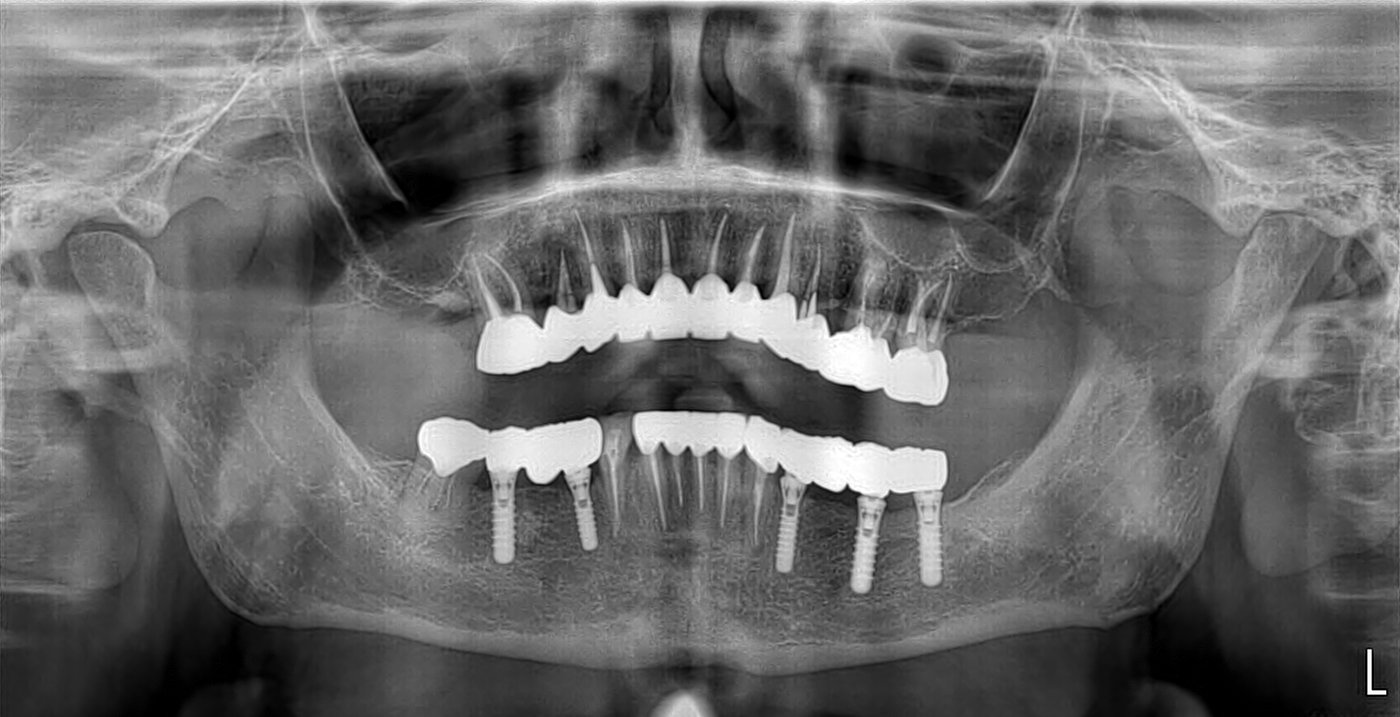
Mixed oral rehabilitation means rebuilding the teeth so that some restorations are supported by natural teeth and others by implants. Teeth that can be kept are treated and restored with crowns or bridges, while the gaps left by lost teeth are filled with implant-supported restorations.
It suits many patients who have lost a few teeth but still have teeth that are healthy or can be treated. It keeps what can be kept and replaces only what is missing. It is one of the forms of full mouth rehabilitation I carry out most often.
When it is recommended
A mixed approach suits patients who have lost some teeth, or have teeth that cannot be saved, while the remaining teeth have healthy roots and good bone support. Typical situations:
- one or more back teeth are missing, while the front teeth are still sound but worn or have old restorations;
- some teeth have large fillings or root canal treatment and need crowns, next to gaps;
- old restorations, such as porcelain-fused-to-metal bridges, need replacing and some of the supporting teeth have since been lost;
- the bite has changed after tooth loss and needs to be rebuilt as a whole.
When another option is better. If most teeth in a jaw are loose, have lost a lot of bone or cannot be treated, keeping them can put the whole restoration at risk. In these cases a fixed restoration on implants alone, such as an All-on restoration, is often more predictable. The decision is made tooth by tooth, after an examination and a CBCT scan.
Treatment planning
The plan covers the whole mouth and is made before any treatment starts. For each tooth I decide whether it can be kept, what treatment it needs and where implants are required.
- Examination and consultation. I find out what bothers you and what you would like. I check your teeth, gums, bite and existing restorations.
- Dental CBCT scan. It shows the roots, the bone available for implants and the surrounding structures. The scan is taken in the clinic.
- Intraoral scanning. I obtain an accurate digital model of your teeth, with no impression material. You can read more in the article on intraoral scanning.
- Photographs and, where needed, digital smile design. These are used to plan the shape and proportions of the new restorations.
- Preparatory treatment. Teeth that are kept need healthy gums and properly treated roots. Here I work with my colleagues at ARTeeth Dental Clinic: the periodontist, the endodontist, the oral surgeon and, if needed, the orthodontist.
- Temporary restorations. They let us check the shape, the bite and your speech before the final restoration is made.
Why restorations on teeth and on implants are kept separate
As a rule, natural teeth and implants are not joined rigidly in the same bridge. A natural tooth is attached to the bone by a ligament that allows very slight movement when you bite. An implant is fused directly to the bone and barely moves at all.
When the two are joined in one restoration, the forces are not shared evenly. The restoration can come loose from the tooth, the tooth can gradually sink into the bone, or the implant can be overloaded. That is why I plan them separately: crowns or bridges on teeth, and crowns or bridges on implants.
Both types of restoration look the same in the mouth. You have a uniform set of teeth, with the same colour and shape, even though the support underneath differs.
Materials
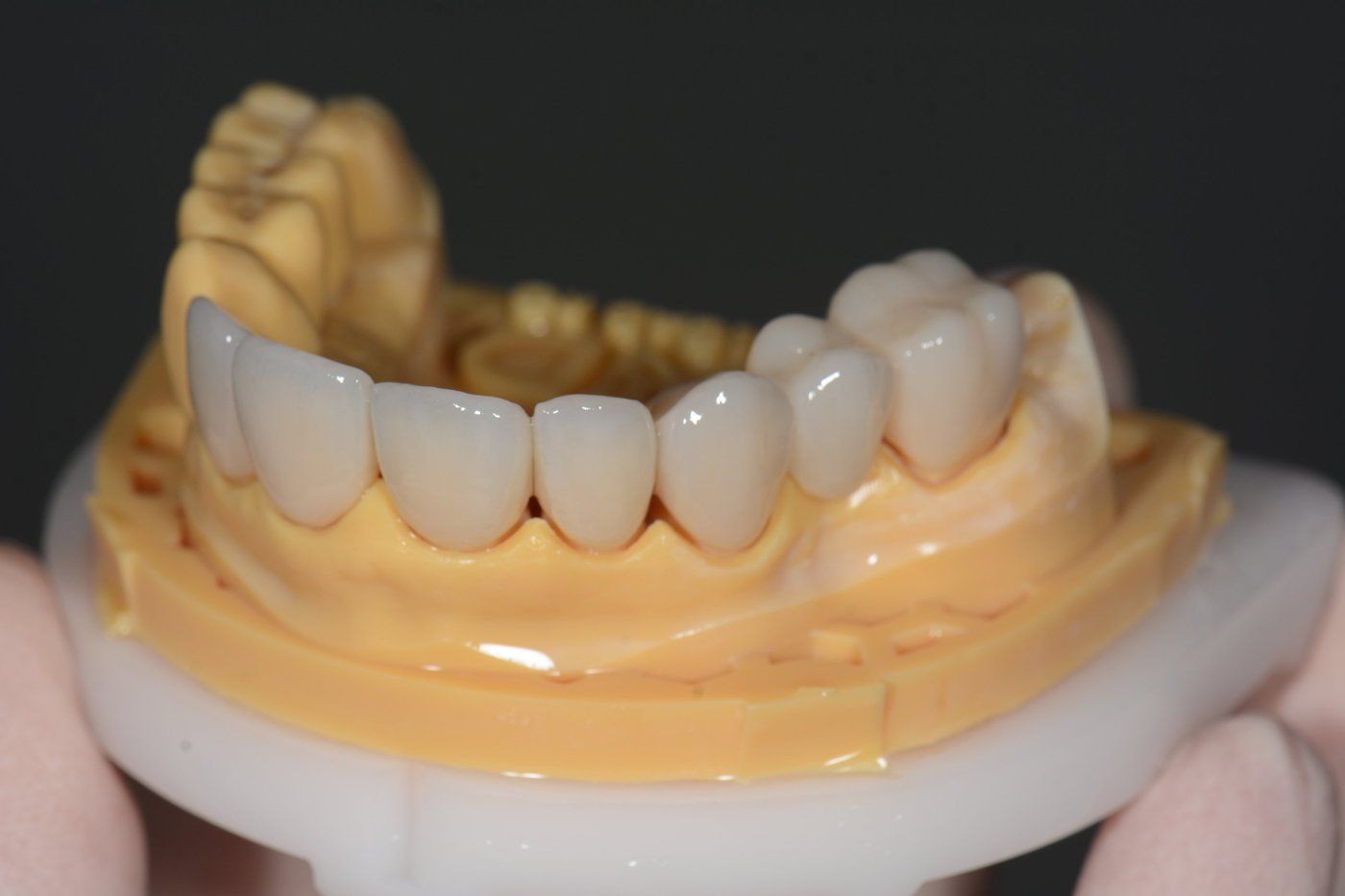
I choose the material according to the position of the tooth, the biting forces and the aesthetic requirements.
| Area | On natural teeth | On implants |
|---|---|---|
| Front teeth | all-ceramic crowns or zirconia crowns layered with ceramic, for natural translucency | zirconia crowns layered with ceramic, on abutments chosen for the appearance of the gum |
| Back teeth | multilayer or monolithic zirconia crowns and bridges, designed to withstand biting forces | zirconia crowns and bridges, screw-retained or cemented |
None of the restorations has metal on the outside, so there are no dark margins at the gum line. They are made with an experienced dental laboratory, from the intraoral scan. You can read more about materials on the page about ceramic and zirconia crowns.
Stages and timing
Mixed treatment usually takes a few months, because implants need time to integrate with the bone. During this period you can wear temporary restorations.
- Preparatory treatment: professional cleaning, gum treatment, root canal treatment and any necessary extractions.
- Implant placement, following the plan made on the CBCT scan. Where there is not enough bone, a bone graft or a sinus lift can be carried out first by the oral surgeon on the ARTeeth Dental Clinic team.
- Osseointegration, which takes between 2 and 6 months, depending on the type of implant and the quality of the bone. During this time you can wear temporary restorations.
- Preparation of the natural teeth and final scan for the definitive crowns and bridges.
- Try-in and cementation. We check the shape, colour and bite before the restorations are fixed permanently.
The order can vary from case to case. Sometimes the restorations on natural teeth are completed before those on implants.
Care and check-ups
Restorations on teeth and on implants are cleaned slightly differently in some areas, but the daily routine is simple:
- a medium-bristle toothbrush rather than a soft one: it does not harm the gum but cleans restorations effectively;
- a water flosser after brushing, for every type of restoration;
- dental floss for single crowns and special bridge floss for bridges; interdental brushes only where I recommend them;
- professional cleaning in the clinic every 3–6 months, depending on your case;
- regular check-ups, at which I examine your gums, bite and implants.
Natural teeth under crowns can still decay at the margins, and the tissue around implants can become inflamed if plaque is not removed. Check-ups allow these problems to be picked up early.
Frequently asked questions
Why keep my teeth if I could have implants everywhere?
A healthy natural tooth with good gum and bone support has advantages an implant cannot fully replace, such as its sensitivity to pressure. Keeping it also means less surgery.
Can the whole treatment be done at once?
Usually not, because implants need 2–6 months to heal. The restorations on natural teeth can be made at the same time or at the end, depending on the plan.
Will I be without teeth during treatment?
You do not need to be. During the healing period you can wear temporary restorations.
Can you tell the restorations on teeth from those on implants?
No. They are all made in the same colour and shape, as one uniform set of teeth.
How long does this kind of restoration last?
With good hygiene and regular check-ups, crowns and implant restorations can last many years. Their lifespan also depends on gum health, bruxism and smoking.
This article provides general information and does not replace a consultation and clinical examination. Every treatment plan is made individually.

Dentist with over 20 years of practice dedicated to prosthodontics and dental aesthetics. Certified in implantology since 2007. Founder of ARTeeth Dental Clinic, Bucharest.
At your first consultation I examine your teeth, gums and existing restorations, and we take a CBCT scan right in the clinic. Based on these, I propose a plan for your whole mouth.