After a dental implant is placed, the final crown is usually fitted 2–6 months later, once osseointegration is complete. At ARTeeth Dental Clinic in Bucharest, Dr. Paul Nicu Dobrescu decides this timing for each patient, based on the type of implant, the quality of the bone and the stability of the implant, checked on CBCT as well.
- Osseointegration is the process by which bone grows around an implant and bonds firmly to its surface.
- It usually takes 2 to 6 months, depending on the type of implant and the quality of the bone.
- The final crown is fitted once the implant has integrated with the bone, because only then can it safely take chewing forces.
- In some cases an implant can be restored sooner, even within the first week, if it is very stable from the start.
- You are not left without teeth during healing: you wear a temporary restoration.
What is osseointegration?
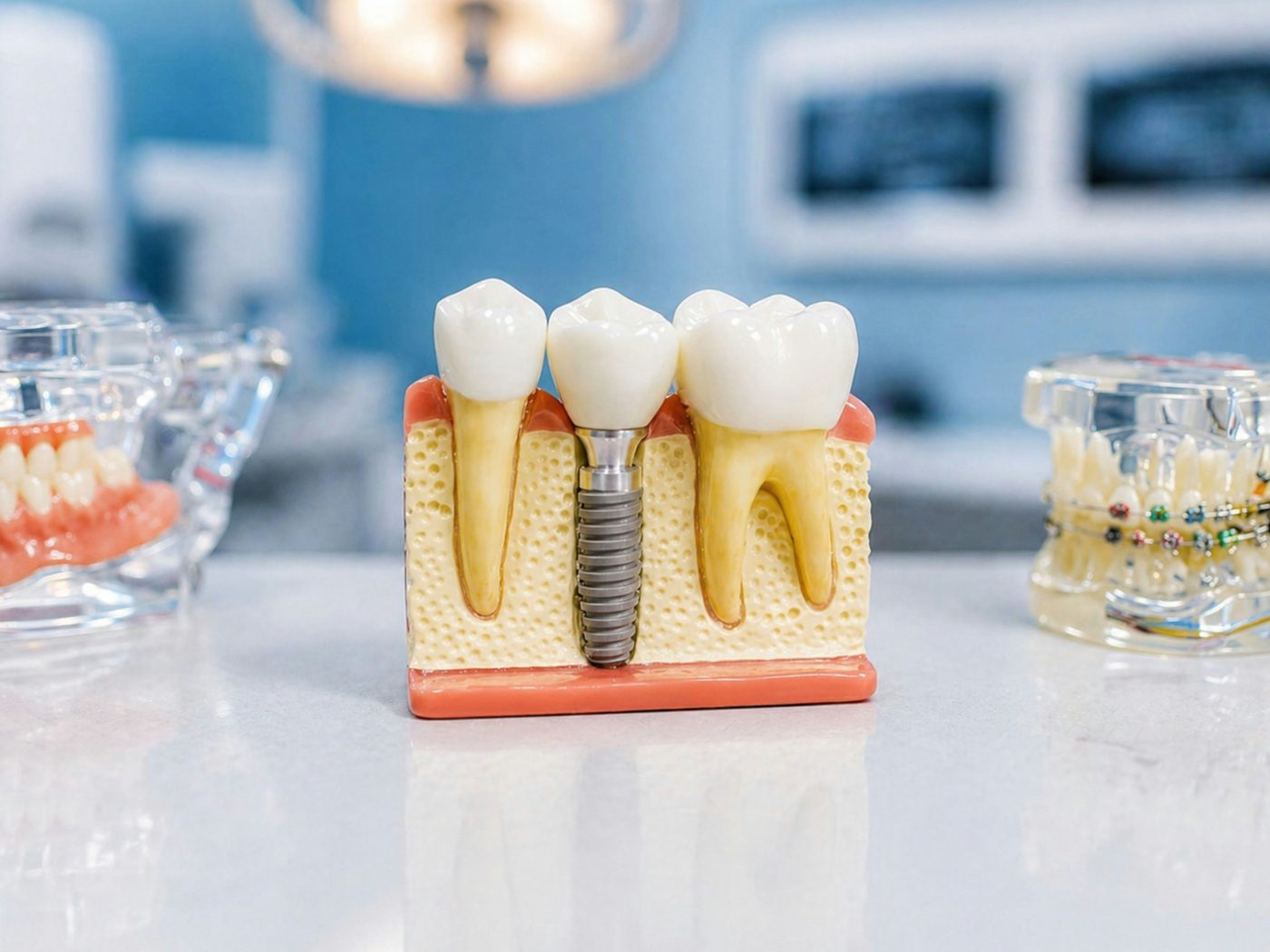
A dental implant is a screw, usually made of titanium, placed in the upper or lower jawbone, taking the place of the root of a lost tooth. A crown, a bridge or a full-arch restoration is then fixed on it.
Osseointegration is the process by which bone grows around the implant and bonds directly to its surface. At the end of this process, the implant is effectively fused to the bone. A natural tooth is attached to the bone by a ligament that allows very slight movement; an implant has no such ligament and rests directly on the bone.
Why is the final crown not fitted straight away?
Immediately after placement, the implant is held in the bone mechanically, by its tight fit in the prepared site. This is called primary stability. Over the following weeks and months, the bone around the implant remodels and new bone forms that bonds to the implant surface. Only then does the implant gain lasting, biological stability.
If the implant is loaded with heavy forces too early, movement in the first weeks can disturb bone healing and the implant may be lost. That is why the final crown, which will take the full force of chewing, is fitted once the implant has integrated with the bone.
How long does osseointegration take?
Usually between 2 and 6 months. The exact time is decided for each patient and depends on several factors:
| Factor | How it affects timing |
|---|---|
| Type of implant | Implant systems differ in shape and surface, which affects how quickly they integrate. |
| Bone quality and quantity | Lower jawbone is generally denser than upper jawbone, where healing can take longer. |
| Bone grafting or sinus lift | When the bone is insufficient and has to be rebuilt before or together with the implant, the waiting time is longer. |
| General health | Medication, smoking and some general conditions affect healing; we assess them before treatment. |
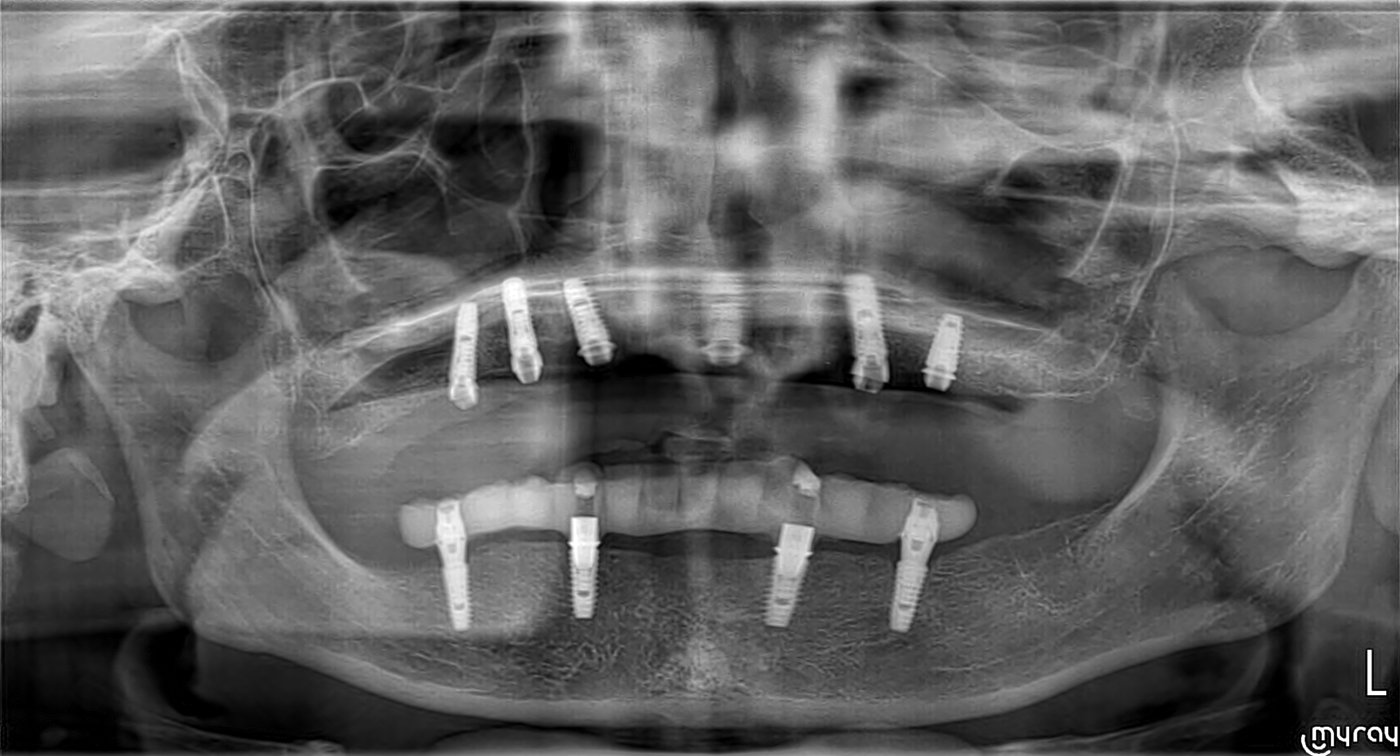
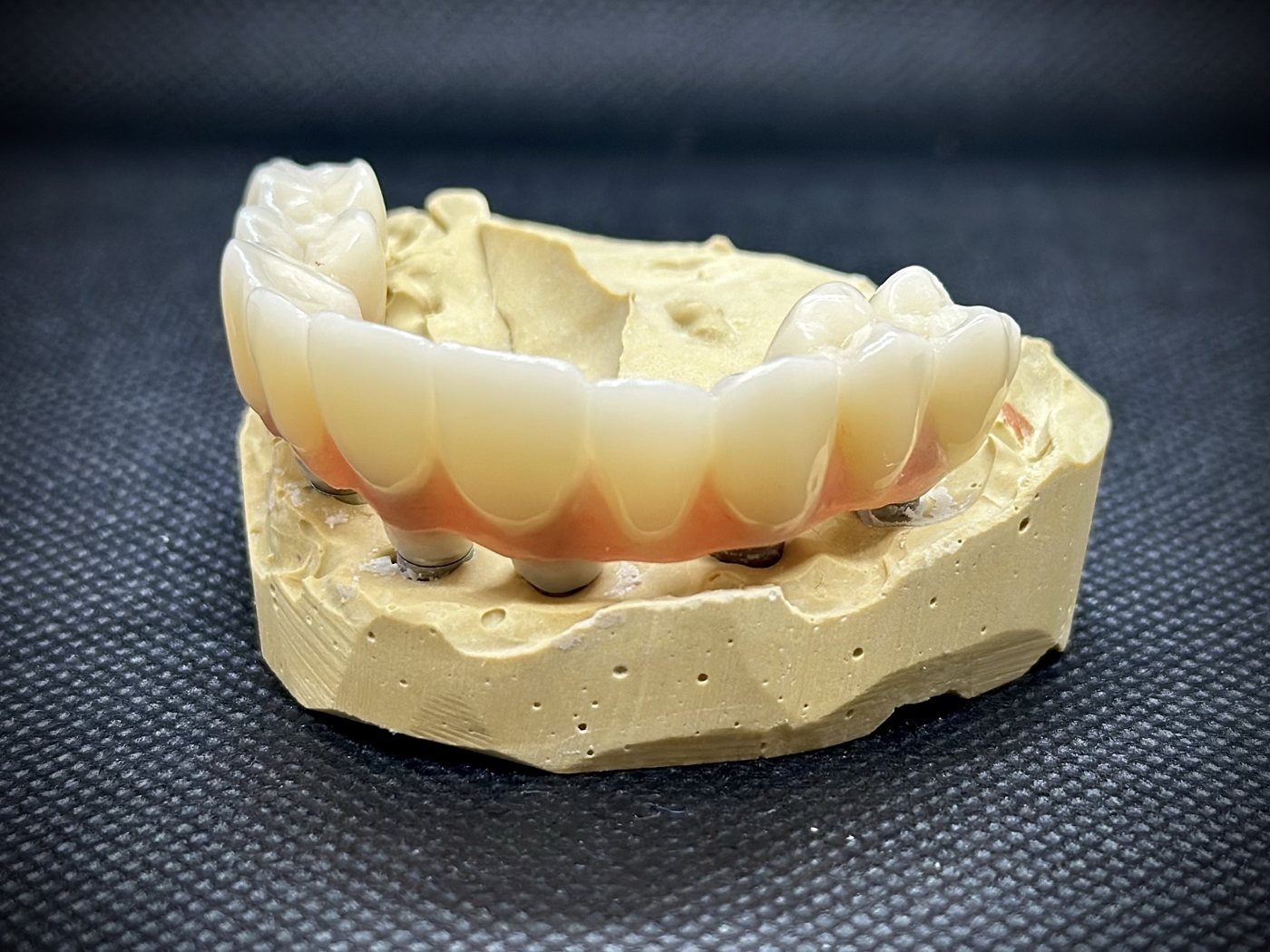
For All-on restorations, which replace all the teeth in an arch, I recommend waiting about 6 months before the final restoration.
When can an implant receive a restoration?
The timing of restoration is divided into three options. An international ITI (International Team for Implantology) consensus review of clinical studies in patients missing one or more teeth reported high implant survival rates for all three [1]:
| Option | When the implant is restored | Implant survival |
|---|---|---|
| Immediate loading | Within the first week after placement | 97.9–98.4% |
| Early loading | Between one week and 2 months | 98.2–98.3% |
| Conventional loading | After more than 2 months of healing | 96.0–97.7% |
Immediate loading is not suitable for every implant, however. The same review stresses that primary stability is one of the key factors for success [1]. That is why I decide after surgery, based on how stable the implant is in the bone and on the bone quality. A restoration fitted early is usually a temporary one; the final restoration is made after osseointegration.
What do you wear while it heals?
You do not need to go without teeth. During osseointegration you wear a temporary restoration, so you can smile and speak normally. When eating, the temporary restoration should be treated gently so that the implant is not overloaded.
With All-on restorations, the fixed temporary restoration is fitted about 24 hours after the implants are placed, based on an impression taken after surgery. The patient wears it over the following months while the implants integrate with the bone.
How I work at ARTeeth Dental Clinic
- CBCT planning. We have a CBCT scanner in the clinic. The 3D images show the height and width of the bone and the position of the sinuses and nerves, so we can decide the position and size of the implant.
- Final check. We also use CBCT to check the position of the implants after placement.
- Implant systems. We work with Straumann, BioHorizons, Bredent, Megagen and Dentium; the choice depends on the case.
- Bone grafting and sinus lift. When the bone is insufficient, the procedure is carried out by the surgeon on the clinic's team.
- Digital impression. After osseointegration, the impression for the final restoration is taken by intraoral scanning, with no impression material.
What happens after osseointegration?
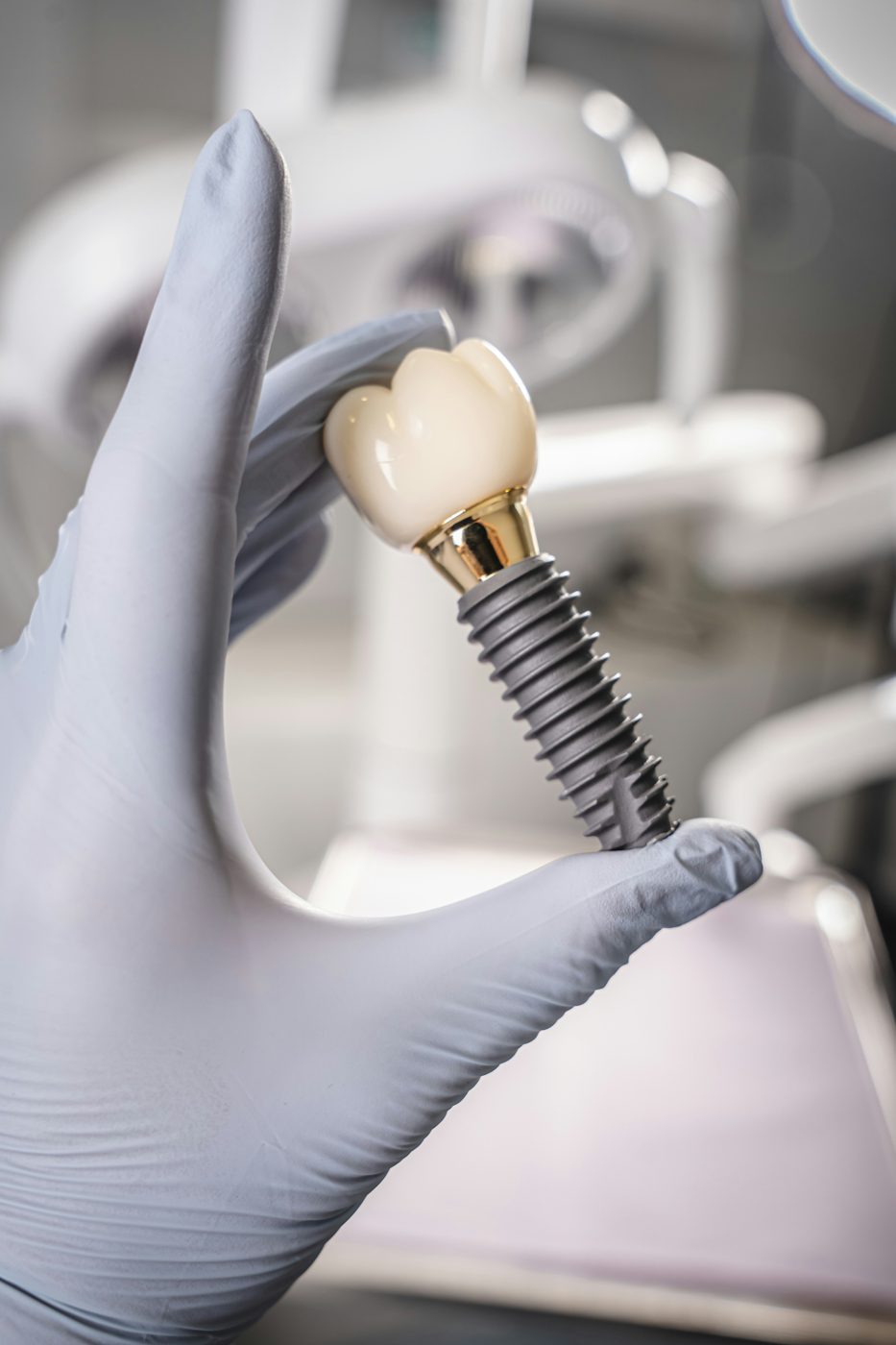
Once the implant has integrated with the bone, the component that supports the restoration is fitted and the final impression is taken. The laboratory then makes the final crown or bridge, which we try in and fix on the implant.
Long-term studies show good results: for single crowns on implants, implant survival was 97.2% at 5 years and 95.2% at 10 years [2], and for implant-supported bridges, 95.6% at 5 years and 93.1% at 10 years [3].
For an implant to last many years, home care matters, with a water flosser after brushing, and so does a professional clean every 3–6 months. I describe the routine in the article on caring for dental restorations. If you have or have had periodontitis, the disease must be treated and kept under control before an implant.
Frequently asked questions
How long after an implant is the crown fitted?
The final crown is usually fitted 2–6 months after the implant is placed, once it has integrated with the bone. Until then you wear a temporary restoration. The exact timing depends on the type of implant, the quality of the bone and the stability of the implant.
How long does dental implant osseointegration take?
Usually between 2 and 6 months, depending on the type of implant and the quality of the bone. If bone grafting or a sinus lift was needed, it can take longer.
Why can't I have the final crown straight after the implant?
Because the implant first has to integrate with the bone. Loaded with heavy forces too early, the implant can move and bone healing can be disturbed.
Will I be without teeth until the final crown?
No. During healing you wear a temporary restoration. With All-on restorations, the fixed temporary restoration is fitted about 24 hours after the implants are placed.
Can the crown be fitted on the same day as the implant?
In some cases an implant can receive a temporary restoration within the first week, if it is very stable in the bone from the start. The final restoration is made after osseointegration.
Is the osseointegration period painful?
Discomfort usually occurs in the first days after surgery. The osseointegration period itself is not painful; if pain or swelling appears later, you should come in for a check.
Can I have an implant while pregnant?
I do not recommend implant treatment during pregnancy. We plan it after the birth and treat anything urgent in the meantime.
Sources
- Gallucci GO, Hamilton A, Zhou W, Buser D, Chen S. Implant placement and loading protocols in partially edentulous patients: a systematic review. Clin Oral Implants Res. 2018;29 Suppl 16:106–134.
- Jung RE, Zembic A, Pjetursson BE, Zwahlen M, Thoma DS. Systematic review of the survival rate and the incidence of biological, technical, and aesthetic complications of single crowns on implants reported in longitudinal studies with a mean follow-up of 5 years. Clin Oral Implants Res. 2012;23 Suppl 6:2–21.
- Pjetursson BE, Thoma D, Jung R, Zwahlen M, Zembic A. A systematic review of the survival and complication rates of implant-supported fixed dental prostheses (FDPs) after a mean observation period of at least 5 years. Clin Oral Implants Res. 2012;23 Suppl 6:22–38.
This article provides general information and does not replace a consultation and clinical examination. Treatment is recommended only after an individual assessment.

Dentist with over 20 years of practice dedicated to prosthodontics and dental aesthetics. Founder of ARTeeth Dental Clinic, Bucharest.
At your consultation we examine the area, assess the bone on a CBCT scan in the clinic and I explain the stages, timing and costs, with no obligation.