A night guard for bruxism is a clear appliance made to the shape of your teeth, worn at night to absorb the forces of clenching and grinding. It does not stop bruxism, but it protects teeth, veneers, crowns and implant restorations from wear, cracks and chipping. At ARTeeth Dental Clinic in Bucharest, I include it in the treatment plan from the start and make it after the final restoration is cemented.
- Bruxism means clenching or grinding the teeth, during sleep or while awake. About one adult in five does it during sleep, and many are unaware of it.
- With bruxism, veneers, crowns and implant restorations take forces greater than those they are designed for.
- A night guard does not cure bruxism, but it takes the forces and protects the teeth and restorations.
- I recommend a night guard after veneers, after All-on restorations and after other extensive restorations covering several teeth. I make it after final cementation.
- It is cleaned daily with a soft brush and cold water and replaced when it shows signs of wear.
What is bruxism?
Bruxism is repetitive jaw-muscle activity in which you clench or grind your teeth or push the lower jaw, without chewing anything. The international expert consensus distinguishes two forms: sleep bruxism and awake bruxism, for example when you are concentrating or under stress and notice your teeth are clenched [1].
In healthy people, bruxism is not considered a disease in itself but a behaviour that can become a risk factor for the teeth, dental restorations and the jaw muscles and joints [1]. A 2024 meta-analysis of studies published over the past 20 years estimates that about 21% of people have sleep bruxism and about 23% awake bruxism [2].
How can you tell if you grind your teeth?
Most of the time you do not notice it yourself. The signs appear over time and are spotted either by those close to you or by your dentist at a check-up:
- your partner hears grinding during the night;
- you wake up with tired facial muscles, jaw pain or headaches, especially at the temples;
- your teeth look shorter, with worn edges or flat, shiny surfaces;
- fine cracks appear in the enamel, small chips on the edges of the front teeth, or fillings break;
- your teeth are sensitive to cold without a visible cavity;
- the muscles at the angle of the jaw are more prominent;
- you have tooth marks along the sides of your tongue or inside your cheeks.
If you recognise two or more of these signs, tell me at the consultation, before prosthodontic treatment begins, not after.
Why are dental restorations more at risk?
A veneer, a crown or an implant restoration is designed to withstand normal chewing forces. With bruxism, the forces are greater, last longer and often come from the side, not just vertically. Over time this can lead to:
| Type of restoration | What can happen with bruxism |
|---|---|
| Porcelain veneers | chipped edges, cracks, debonding |
| Crowns and bridges on teeth | chipped ceramic, cracks, loss of cementation |
| Implant restorations | loosened screws, chipped or fractured ceramic, overloaded components |
| Natural teeth | accelerated wear, cracks, sensitivity |
A clinical study of 70 patients with porcelain veneers followed the fractures and debondings that occurred over time: of 13 fractures, 8 were in patients with bruxism, and of 29 debondings, 22. The authors concluded that the risk of failure is higher with bruxism and that wearing a night guard reduces the risk of fracture [4]. For an example of what happens when a veneer chips, see the clinical case on replacing a chipped ceramic veneer.
With implant restorations, the difference matters even more. A natural tooth has a ligament around its root that cushions pressure; an implant rests directly on the bone and has no such mechanism. Studies show that bruxism increases the risk of technical complications with implant restorations, such as component fractures and screw loosening [5].
What does a night guard actually do?
- It protects. When you clench or grind, contact happens on the night guard, not directly between the teeth or restorations. The wear moves to the night guard, which can be replaced.
- It spreads the forces. A well-fitted custom night guard distributes pressure across all the teeth instead of concentrating it on a few points.
- It does not cure bruxism. A Cochrane review concluded there is not enough evidence that night guards reduce sleep bruxism, but that they may help prevent tooth wear [3]. That is why we use it as protection, not as a treatment that makes bruxism go away.
If bruxism is driven by other causes, such as significant stress or sleep disorders, these are addressed separately, sometimes with other doctors.
Over-the-counter or custom night guard?
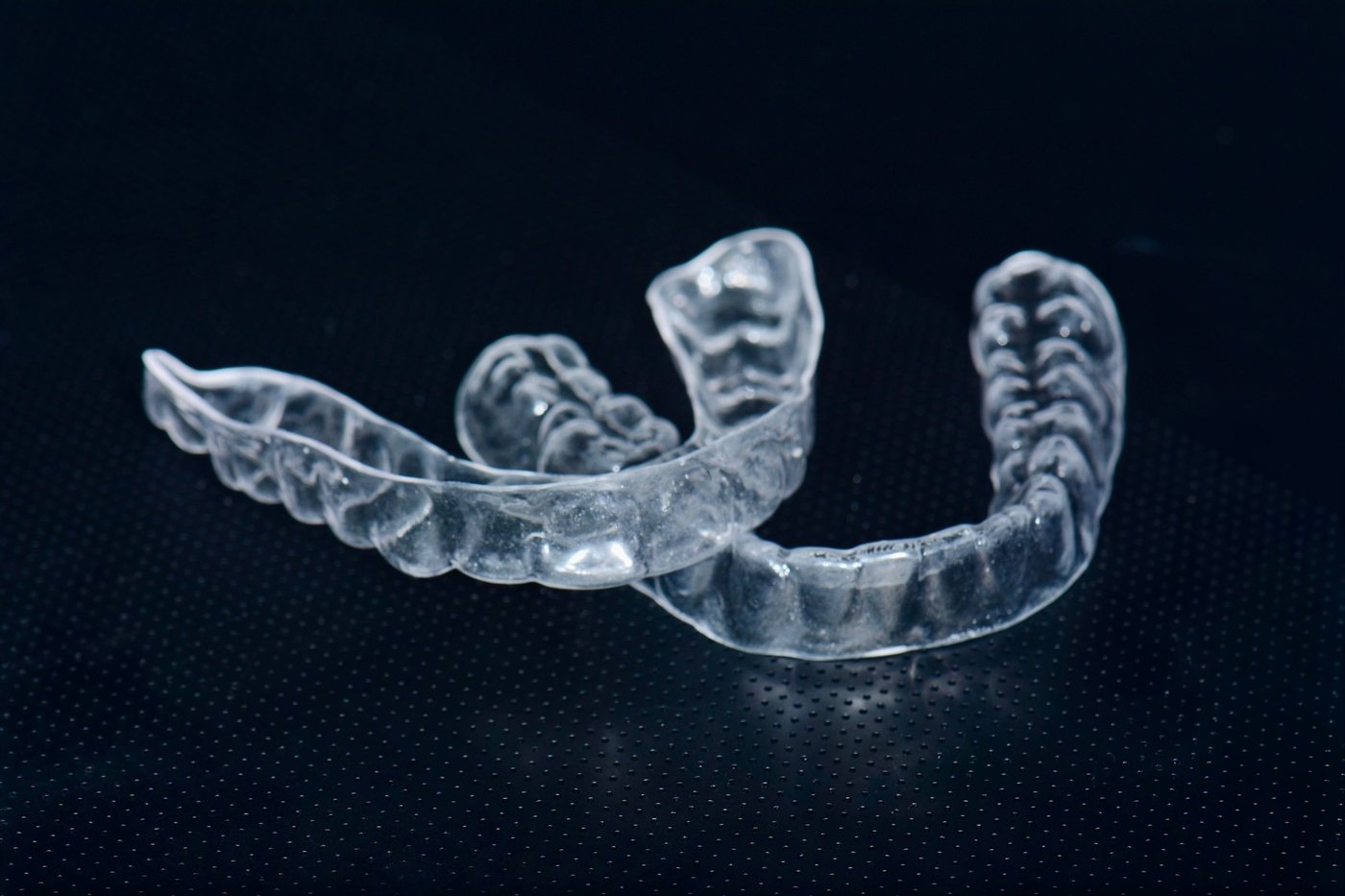
| Over-the-counter night guard | Custom night guard made at the clinic | |
|---|---|---|
| How it is made | you shape it yourself after softening it in hot water | thermoformed on a model made from a scan of your teeth |
| Fit | approximate | exact, to the shape of your teeth and restorations |
| On dental restorations | not adjusted to your bite and does not control contacts between the teeth | I check it on the final restorations |
| Follow-up | no dental check | checked at regular check-ups |
An over-the-counter night guard can be a temporary solution, but for anyone with veneers, crowns or implant restorations I recommend a night guard made at the clinic, to the real shape of the teeth and restorations.
When is the night guard made after new dental work?
The night guard is part of the treatment plan from the start. I make it after the final cementation of the veneers or restoration, when the shape of the teeth and restorations no longer changes, so that it fits exactly. I recommend it after veneers, after All-on restorations and after other extensive restorations covering several teeth.
If you already have a night guard made before treatment, it will no longer fit after veneers, crowns or a new implant restoration and has to be remade.
How do you wear it and care for it?
- Wear it every night, not only “when you feel you are clenching”. If you also clench during the day, I will tell you whether to wear it in the daytime as well.
- Clean it daily with a soft brush and cold water. Hot water can warp a thermoformed night guard.
- Keep it in its case, away from heat and pets.
- Bring it to every check-up and professional clean, which for dental restorations is every 3–6 months. That way we check both the restorations and the night guard.
- The night guard is replaced when it shows signs of wear. Depending on how hard you clench or grind, it can last a few months or a few years.
- If it cracks, no longer sits firmly or your bite feels different, book a check.
For caring for the restorations themselves, the full routine is in the article on caring for dental restorations.
How I work at ARTeeth Dental Clinic
- Assessment before treatment. At the consultation before prosthodontic work I look for signs of bruxism and take them into account when choosing materials and adjusting the bite.
- A night guard in the plan. For veneers, All-on restorations and other extensive work, the night guard is in the written treatment plan from the start.
- Digital scan. After final cementation I scan the teeth with the 3Shape Trios 5 intraoral scanner, with no impression material. The night guard is thermoformed on the resulting model. I wrote about scanning in the article on digital impressions.
- Regular checks. At check-ups and professional cleans we check the restoration and the wear on the night guard.
Frequently asked questions
Do I need a night guard if I don't know I grind my teeth?
Many people with bruxism do not know they have it. If I see wear, cracks or other signs at the consultation, I will recommend a night guard. After veneers, All-on restorations or other extensive work covering several teeth, I recommend one as protection.
Does a night guard stop bruxism?
No. A night guard does not stop clenching or grinding, but it takes the forces and protects the teeth and dental restorations from wear and cracks.
Can I use an over-the-counter night guard over veneers or crowns?
It is not recommended as a long-term solution. A night guard shaped at home is not adjusted to your bite and does not control contacts between the teeth; for dental restorations, the night guard is made at the clinic, to the real shape of the teeth and restorations.
I have an All-on restoration or work on several teeth. Do I need a night guard?
Yes. I recommend a night guard after All-on restorations and after other extensive work covering several teeth. Implants lack the ligament that cushions forces on natural teeth, and bruxism increases the risk of technical complications with implant restorations.
When is the night guard made after veneers?
The night guard is in the treatment plan from the start and is made after the veneers are finally cemented, when the shape of the teeth no longer changes.
How long does a night guard last?
It can last a few months or a few years, depending on how hard you clench or grind. We replace it when it shows signs of wear, which we check at check-ups.
How do I clean my night guard?
Clean it daily with a soft brush and cold water. Hot water can warp it, so keep it in its case, away from heat.
Sources
- Lobbezoo F, Ahlberg J, Raphael KG, et al. International consensus on the assessment of bruxism: Report of a work in progress. J Oral Rehabil. 2018;45(11):837–844.
- Zieliński G, Pająk A, Wójcicki M. Global Prevalence of Sleep Bruxism and Awake Bruxism in Pediatric and Adult Populations: A Systematic Review and Meta-Analysis. J Clin Med. 2024;13(14):4259.
- Macedo CR, Silva AB, Machado MAC, Saconato H, Prado GF. Occlusal splints for treating sleep bruxism (tooth grinding). Cochrane Database Syst Rev. 2007;(4):CD005514.
- Granell-Ruíz M, Agustín-Panadero R, Fons-Font A, Román-Rodríguez JL, Solá-Ruíz MF. Influence of bruxism on survival of porcelain laminate veneers. Med Oral Patol Oral Cir Bucal. 2014;19(5):e426–e432.
- Shafiee E, Nourizadeh A. Bruxism in implant-supported rehabilitations: a narrative review of clinical complications and management strategies. BMC Oral Health. 2025;25:1586.
This article provides general information and does not replace a consultation and clinical examination. Treatment is recommended only after an individual assessment.

Dentist with over 20 years of practice dedicated to prosthodontics and dental aesthetics. Founder of ARTeeth Dental Clinic, Bucharest.
At your consultation we examine your teeth and bite, look for signs of bruxism and I explain the treatment stages, night guard included, with no obligation.